Бесплатный урок с нашим репетитором!

Узнать подробнее

Новая Школа - онлайн-школа подготовки к ЕГЭ
При поддержке
Посмотреть все вопросы нейросети
Бесплатный пробный урок с репетитором

Узнай больше про репетиторов Новой Школы и запишись на бесплатный пробный урок. Мы проверим твой уровень знаний и составим план обучения по любому предмету и классу

Вопрос от Анонимного юзера 09 января 2025 19:37

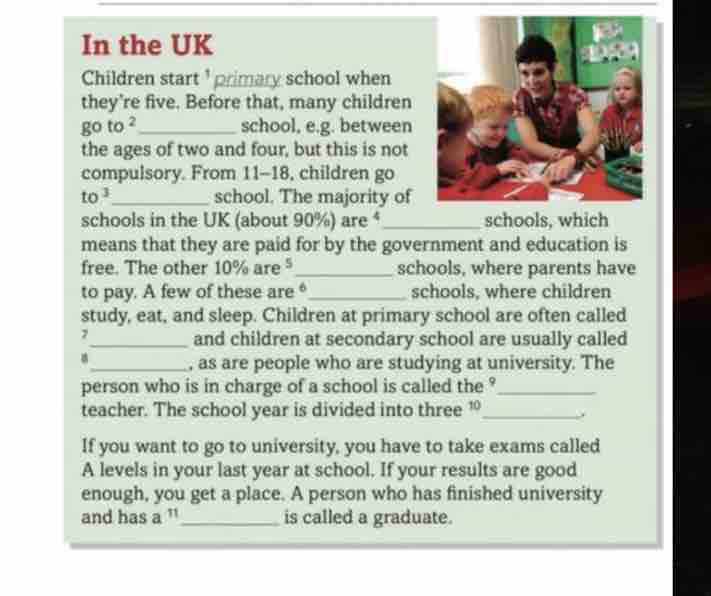
Вставь пропущенные слова
Ответ нейросети

09 января 2025 19:37

Конечно, вот заполненные пропуски:

Children start primary school when they're five. After that, many children go to secondary school, e.g. between the ages of two and four, but this is not compulsory. From 11–18, children go to secondary school. The majority of schools in the UK (about 90%) are state schools, which means that they are paid for by the government and education is free. The other 10% are private schools, where parents have to pay. A few of these schools are called boarding schools, where children study, eat, and sleep. Children at primary school are usually called pupils, and at secondary school they are often called students. There are also people who are studying at university. The person who is in charge of a school is called the headteacher. The school year is divided into three terms.

If you want to go to university, you have to take exams called A levels in your last year at school. If your results are good enough, you get a place. A person who has finished university and has a degree is called a graduate.

Задай свой вопрос

Напиши любую задачу или вопрос, а нейросеть её решит

Похожие вопросы 15

Бесплатно Мобильное приложение ГДЗ
Мобильное приложение ГДЗ

Задавай вопросы искуcственному интеллекту текстом или фотографиями в приложении на iPhone или Android

qr-codegoogle-playapp-store

Саша — ассистент в телеграмме

Вставь пропущенные слова
Конечно, вот заполненные пропуски: Children start **primary** school when they're five. After that, many children go to **secondary** school, e.g. between the ages of two and four, but this is not compulsory. From 11–18, children go to **secondary** school. The majority of schools in the UK (about 90%) are **state** schools, which means that they are paid for by the government and education is free. The other 10% are **private** schools, where parents have to pay. A few of these schools are called **boarding** schools, where children study, eat, and sleep. Children at primary school are usually called **pupils**, and at secondary school they are often called **students**. There are also people who are studying at university. The person who is in charge of a school is called the **headteacher**. The school year is divided into three **terms**. If you want to go to university, you have to take exams called **A levels** in your last year at school. If your results are good enough, you get a place. A person who has finished university and has a **degree** is called a graduate.