Бесплатный урок с нашим репетитором!

Узнать подробнее

Новая Школа - онлайн-школа подготовки к ЕГЭ
При поддержке
Посмотреть все вопросы нейросети
Бесплатный пробный урок с репетитором

Узнай больше про репетиторов Новой Школы и запишись на бесплатный пробный урок. Мы проверим твой уровень знаний и составим план обучения по любому предмету и классу

Вопрос от Анонимного юзера 13 января 2025 12:58

.
Ответ нейросети

13 января 2025 12:58

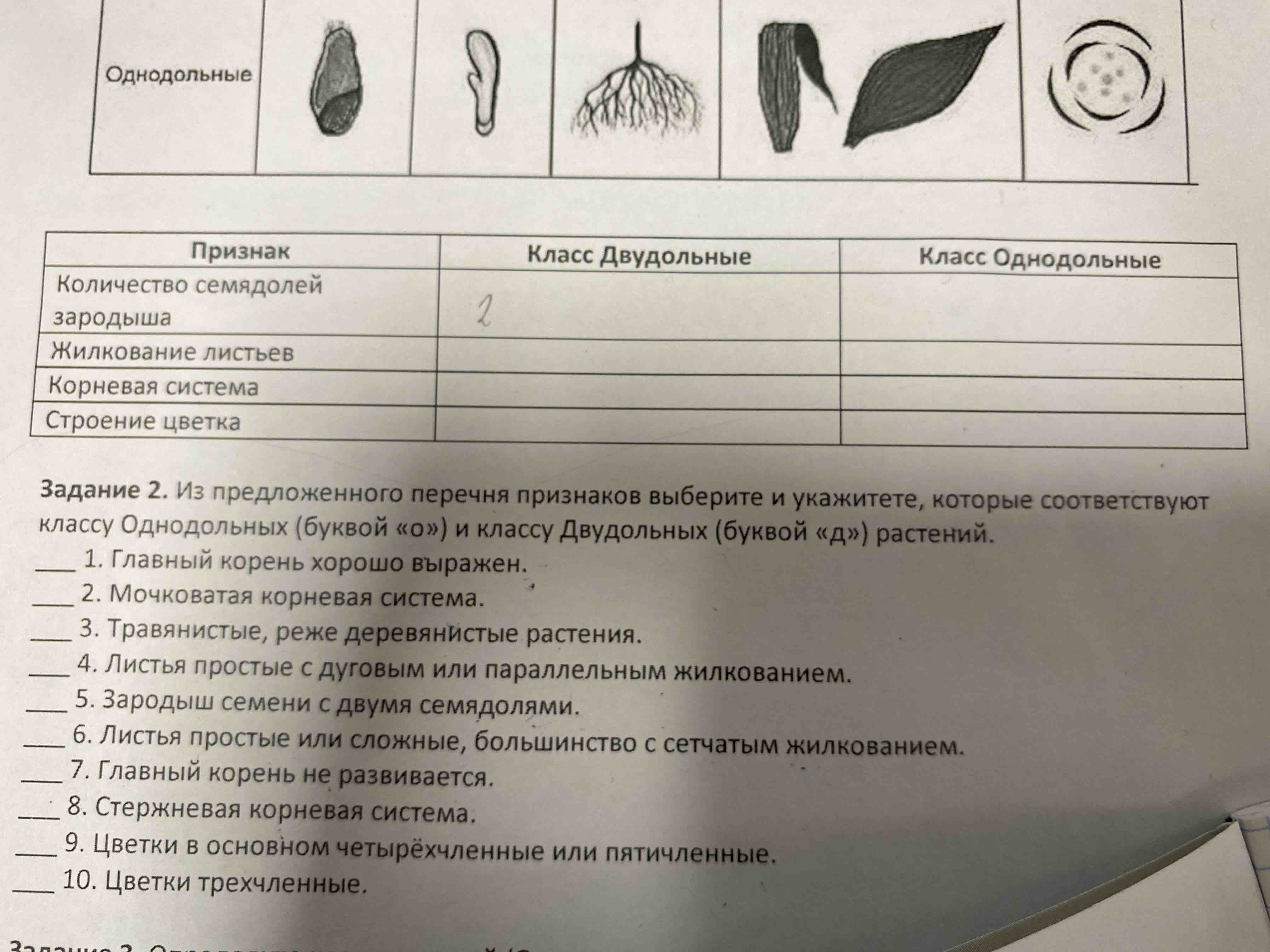
The exercise in the image asks you to observe different plant characteristics and identify which ones correspond to dicots (дводольные) and monocots (однодольные). Here's a general guide to help you:

  1. Number of Cotyledons:

    • Dicots: Two cotyledons
    • Monocots: One cotyledon
  2. Leaf Vein Structure:

    • Dicots: Net-like vein pattern
    • Monocots: Parallel veins
  3. Root System:

    • Dicots: Taproot system
    • Monocots: Fibrous root system
  4. Flower Parts:

    • Dicots: Typically in multiples of four or five
    • Monocots: Typically in multiples of three

Based on these features, you can match the images of plant parts to the correct plant class.

Задай свой вопрос

Напиши любую задачу или вопрос, а нейросеть её решит

Похожие вопросы 15

Бесплатно Мобильное приложение ГДЗ
Мобильное приложение ГДЗ

Задавай вопросы искуcственному интеллекту текстом или фотографиями в приложении на iPhone или Android

qr-codegoogle-playapp-store

Саша — ассистент в телеграмме

.
The exercise in the image asks you to observe different plant characteristics and identify which ones correspond to dicots (дводольные) and monocots (однодольные). Here's a general guide to help you: 1. **Number of Cotyledons:** - Dicots: Two cotyledons - Monocots: One cotyledon 2. **Leaf Vein Structure:** - Dicots: Net-like vein pattern - Monocots: Parallel veins 3. **Root System:** - Dicots: Taproot system - Monocots: Fibrous root system 4. **Flower Parts:** - Dicots: Typically in multiples of four or five - Monocots: Typically in multiples of three Based on these features, you can match the images of plant parts to the correct plant class.