Бесплатный урок с нашим репетитором!

Узнать подробнее

Новая Школа - онлайн-школа подготовки к ЕГЭ
При поддержке
Посмотреть все вопросы нейросети
Бесплатный пробный урок с репетитором

Узнай больше про репетиторов Новой Школы и запишись на бесплатный пробный урок. Мы проверим твой уровень знаний и составим план обучения по любому предмету и классу

Вопрос от Анонимного юзера 21 января 2025 08:44

Английский
Ответ нейросети

21 января 2025 08:44

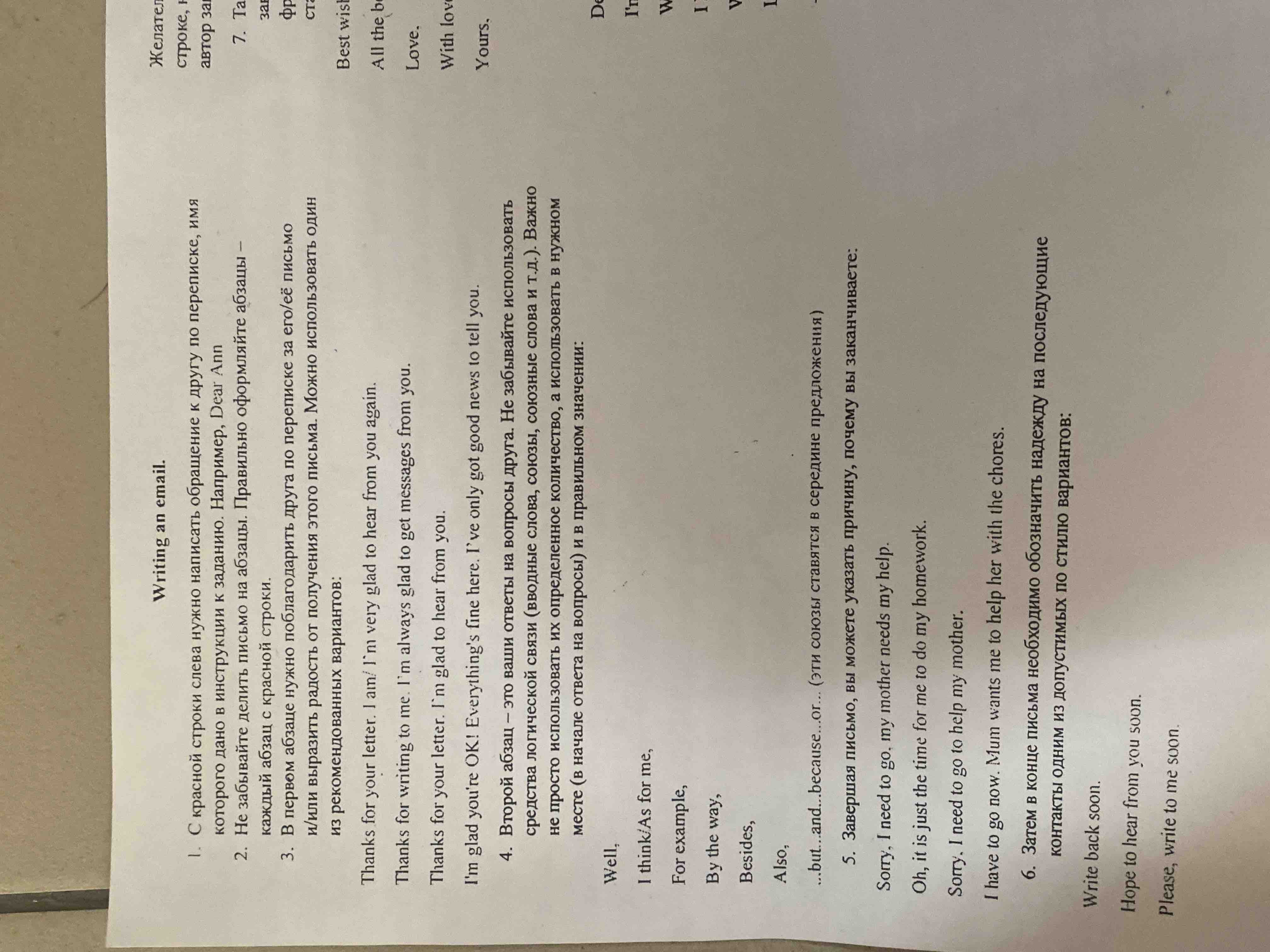
This image provides guidance on writing emails. Here's a summary of the key points:

  1. Addressing:

    • Start with a friendly address if it's an email to a friend, such as "Dear Ann."
  2. Structure:

    • Opening line examples:
      • "How are you?" or "I hope you're fine."
      • Referencing the previous email: "Thanks for your letter. I was glad to get messages from you."
  3. Content:

    • Respond to any questions from the previous email.
    • Discuss everyday activities, interests, or upcoming events.
  4. Closing:

    • Use phrases like "Write back soon," or "Hope to hear from you soon."
    • Sign off with "Best wishes," "All the best," or similar phrases.
  5. Language:

    • Use clear, polite, and friendly language.
    • Connect sentences with conjunctions such as "and," "because," etc.
  6. Common expressions:

    • Phrases like "Sorry, I must go now," or "I hope everything is okay" can be useful.

The document provides examples and advice on phrasing to ensure clarity and friendliness in communication.

Задай свой вопрос

Напиши любую задачу или вопрос, а нейросеть её решит

Похожие вопросы 15

Бесплатно Мобильное приложение ГДЗ
Мобильное приложение ГДЗ

Задавай вопросы искуcственному интеллекту текстом или фотографиями в приложении на iPhone или Android

qr-codegoogle-playapp-store

Саша — ассистент в телеграмме

английский
This image provides guidance on writing emails. Here's a summary of the key points: 1. Addressing: - Start with a friendly address if it's an email to a friend, such as "Dear Ann." 2. Structure: - Opening line examples: - "How are you?" or "I hope you're fine." - Referencing the previous email: "Thanks for your letter. I was glad to get messages from you." 3. Content: - Respond to any questions from the previous email. - Discuss everyday activities, interests, or upcoming events. 4. Closing: - Use phrases like "Write back soon," or "Hope to hear from you soon." - Sign off with "Best wishes," "All the best," or similar phrases. 5. Language: - Use clear, polite, and friendly language. - Connect sentences with conjunctions such as "and," "because," etc. 6. Common expressions: - Phrases like "Sorry, I must go now," or "I hope everything is okay" can be useful. The document provides examples and advice on phrasing to ensure clarity and friendliness in communication.