Бесплатный урок с нашим репетитором!

Узнать подробнее

Новая Школа - онлайн-школа подготовки к ЕГЭ
При поддержке
Посмотреть все вопросы нейросети
Бесплатный пробный урок с репетитором

Узнай больше про репетиторов Новой Школы и запишись на бесплатный пробный урок. Мы проверим твой уровень знаний и составим план обучения по любому предмету и классу

Вопрос от Анонимного юзера 22 января 2025 06:11

2*2
Ответ нейросети

22 января 2025 06:11

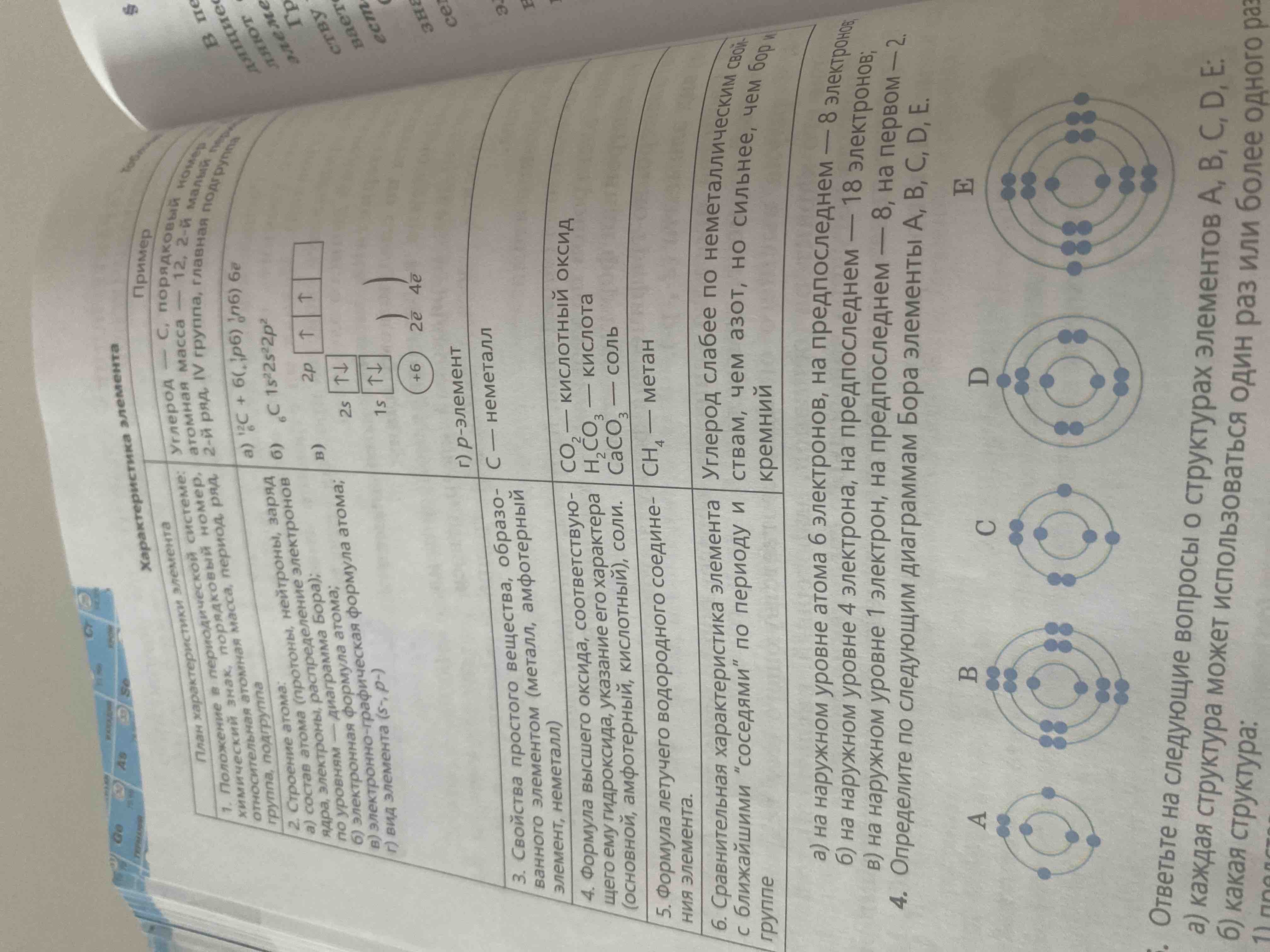
It looks like this is a page from a chemistry textbook focusing on periodic table elements and their properties. Here are some of the main topics covered:

  1. Characteristics of Elements: This section likely discusses features such as atomic number, electron configuration, and chemical properties.
  2. Chemical Compounds: There are examples of compounds, highlighting chemical reactions or molecule structures.
  3. Periodic Table Groups: It may explain different groups like metals, nonmetals, and metalloids.
  4. Electron Shells: There are diagrams showing electron configurations or Bohr models for different elements.
  5. Hydrogen Compounds: There is a formula for a hydrogen compound (e.g., methane - CH₄).
  6. Questions and Exercises: At the bottom, there are likely exercises to test understanding of the material.

If you need help with a specific concept or exercise, feel free to ask!

Задай свой вопрос

Напиши любую задачу или вопрос, а нейросеть её решит

Похожие вопросы 15

Бесплатно Мобильное приложение ГДЗ
Мобильное приложение ГДЗ

Задавай вопросы искуcственному интеллекту текстом или фотографиями в приложении на iPhone или Android

qr-codegoogle-playapp-store

Саша — ассистент в телеграмме

2*2
It looks like this is a page from a chemistry textbook focusing on periodic table elements and their properties. Here are some of the main topics covered: 1. **Characteristics of Elements**: This section likely discusses features such as atomic number, electron configuration, and chemical properties. 2. **Chemical Compounds**: There are examples of compounds, highlighting chemical reactions or molecule structures. 3. **Periodic Table Groups**: It may explain different groups like metals, nonmetals, and metalloids. 4. **Electron Shells**: There are diagrams showing electron configurations or Bohr models for different elements. 5. **Hydrogen Compounds**: There is a formula for a hydrogen compound (e.g., methane - CH₄). 6. **Questions and Exercises**: At the bottom, there are likely exercises to test understanding of the material. If you need help with a specific concept or exercise, feel free to ask!