Бесплатный урок с нашим репетитором!

Узнать подробнее

Новая Школа - онлайн-школа подготовки к ЕГЭ
При поддержке
Посмотреть все вопросы нейросети
Бесплатный пробный урок с репетитором

Узнай больше про репетиторов Новой Школы и запишись на бесплатный пробный урок. Мы проверим твой уровень знаний и составим план обучения по любому предмету и классу

Вопрос от Анонимного юзера 04 февраля 2025 11:29

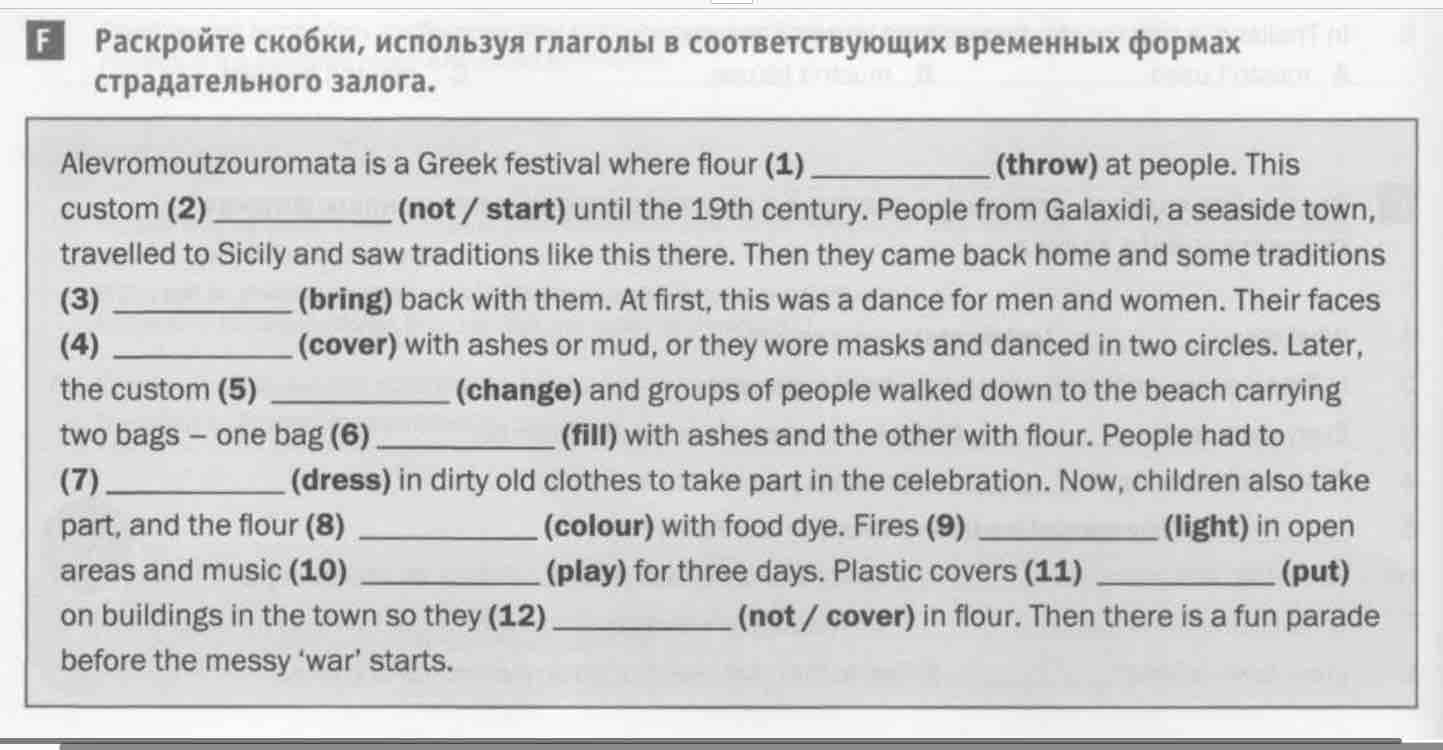
Реши задачу на картинке
Ответ нейросети

04 февраля 2025 11:29

Чтобы раскрыть глаголы в скобках в соответствии с временными формами страдательного залога, разберём каждый случай по очереди и подробно объясним решение.

  1. Alevromoutzouromata is a Greek festival where flour is thrown (throw) at people.

    • Используется настоящее простое время, чтобы описать общее утверждение. Страдательный залог: is thrown.
  2. This custom was celebrated (celebrate) until the 19th century.

    • Поскольку речь идет о прошлом времени, используем прошедшее время страдательного залога: was celebrated.
  3. Until then, people from Galaxidi, a seaside town, travelled to Sicily and saw traditions like this there. Then they came back home and some traditions were added (add).

    • Чтобы описать действия, произошедшие в прошлом, используем прошедшее время страдательного залога: were added.
  4. At first, this was a dance for men and women. Their faces were covered (cover) with ashes or mud.

    • Действие в прошлом, используем прошедшее время страдательного залога: were covered.
  5. Today, the custom is changed (change) and groups of people walk down to the beach carrying two bags – one bag is filled (fill) with ashes, and the other with flour.

    • Настоящее простое время для описания нынешнего состояния или регулярных действий, страдательный залог: is changed, is filled.
  6. These are dropped (drop) in dirty old clothes to take part in the celebration.

    • Настоящее простое время для описания текущих действий: are dropped.
  7. Now, alcohol and the music are played (play) in the air.

    • Настоящее простое время, страдательный залог: are played.
  8. Fires are lit (light) in open areas, and doughnuts are fried (fry) for three days.

    • Используем настоящее простое время для непрерывных или регулярных действий: are lit, are fried.
  9. Plastic covers are put (put) on buildings in the town so they are not covered (cover) in flour.

    • Настоящее простое время страдательного залога: are put, are not covered.

Полностью решение будет таким:

Alevromoutzouromata is a Greek festival where flour is thrown at people. This custom was celebrated until the 19th century. Until then, people from Galaxidi, a seaside town, travelled to Sicily and saw traditions like this there. Then they came back home and some traditions were added. At first, this was a dance for men and women. Their faces were covered with ashes or mud.

Today, the custom is changed and groups of people walk down to the beach carrying two bags – one bag is filled with ashes, and the other with flour. These are dropped in dirty old clothes to take part in the celebration. Now, alcohol and the music are played in the air. Fires are lit in open areas, and doughnuts are fried for three days. Plastic covers are put on buildings in the town so they are not covered in flour.

Задай свой вопрос

Напиши любую задачу или вопрос, а нейросеть её решит

Похожие вопросы 15

Бесплатно Мобильное приложение ГДЗ
Мобильное приложение ГДЗ

Задавай вопросы искуcственному интеллекту текстом или фотографиями в приложении на iPhone или Android

qr-codegoogle-playapp-store

Саша — ассистент в телеграмме

Реши задачу на картинке
Чтобы раскрыть глаголы в скобках в соответствии с временными формами страдательного залога, разберём каждый случай по очереди и подробно объясним решение. 1. Alevromoutzouromata is a Greek festival where flour **is thrown** (throw) at people. - Используется настоящее простое время, чтобы описать общее утверждение. Страдательный залог: *is thrown*. 2. This custom **was celebrated** (celebrate) until the 19th century. - Поскольку речь идет о прошлом времени, используем прошедшее время страдательного залога: *was celebrated*. 3. Until then, people from Galaxidi, a seaside town, travelled to Sicily and saw traditions like this there. Then they came back home and some traditions **were added** (add). - Чтобы описать действия, произошедшие в прошлом, используем прошедшее время страдательного залога: *were added*. 4. At first, this was a dance for men and women. Their faces **were covered** (cover) with ashes or mud. - Действие в прошлом, используем прошедшее время страдательного залога: *were covered*. 5. Today, the custom **is changed** (change) and groups of people walk down to the beach carrying two bags – one bag **is filled** (fill) with ashes, and the other with flour. - Настоящее простое время для описания нынешнего состояния или регулярных действий, страдательный залог: *is changed*, *is filled*. 6. These **are dropped** (drop) in dirty old clothes to take part in the celebration. - Настоящее простое время для описания текущих действий: *are dropped*. 7. Now, alcohol and the music **are played** (play) in the air. - Настоящее простое время, страдательный залог: *are played*. 8. Fires **are lit** (light) in open areas, and doughnuts **are fried** (fry) for three days. - Используем настоящее простое время для непрерывных или регулярных действий: *are lit*, *are fried*. 9. Plastic covers **are put** (put) on buildings in the town so they **are not covered** (cover) in flour. - Настоящее простое время страдательного залога: *are put*, *are not covered*. Полностью решение будет таким: Alevromoutzouromata is a Greek festival where flour **is thrown** at people. This custom **was celebrated** until the 19th century. Until then, people from Galaxidi, a seaside town, travelled to Sicily and saw traditions like this there. Then they came back home and some traditions **were added**. At first, this was a dance for men and women. Their faces **were covered** with ashes or mud. Today, the custom **is changed** and groups of people walk down to the beach carrying two bags – one bag **is filled** with ashes, and the other with flour. These **are dropped** in dirty old clothes to take part in the celebration. Now, alcohol and the music **are played** in the air. Fires **are lit** in open areas, and doughnuts **are fried** for three days. Plastic covers **are put** on buildings in the town so they **are not covered** in flour.