Бесплатный урок с нашим репетитором!

Узнать подробнее

Новая Школа - онлайн-школа подготовки к ЕГЭ
При поддержке
Посмотреть все вопросы нейросети
Бесплатный пробный урок с репетитором

Узнай больше про репетиторов Новой Школы и запишись на бесплатный пробный урок. Мы проверим твой уровень знаний и составим план обучения по любому предмету и классу

Вопрос от Анонимного юзера 18 февраля 2025 05:53

4
Ответ нейросети

18 февраля 2025 05:53

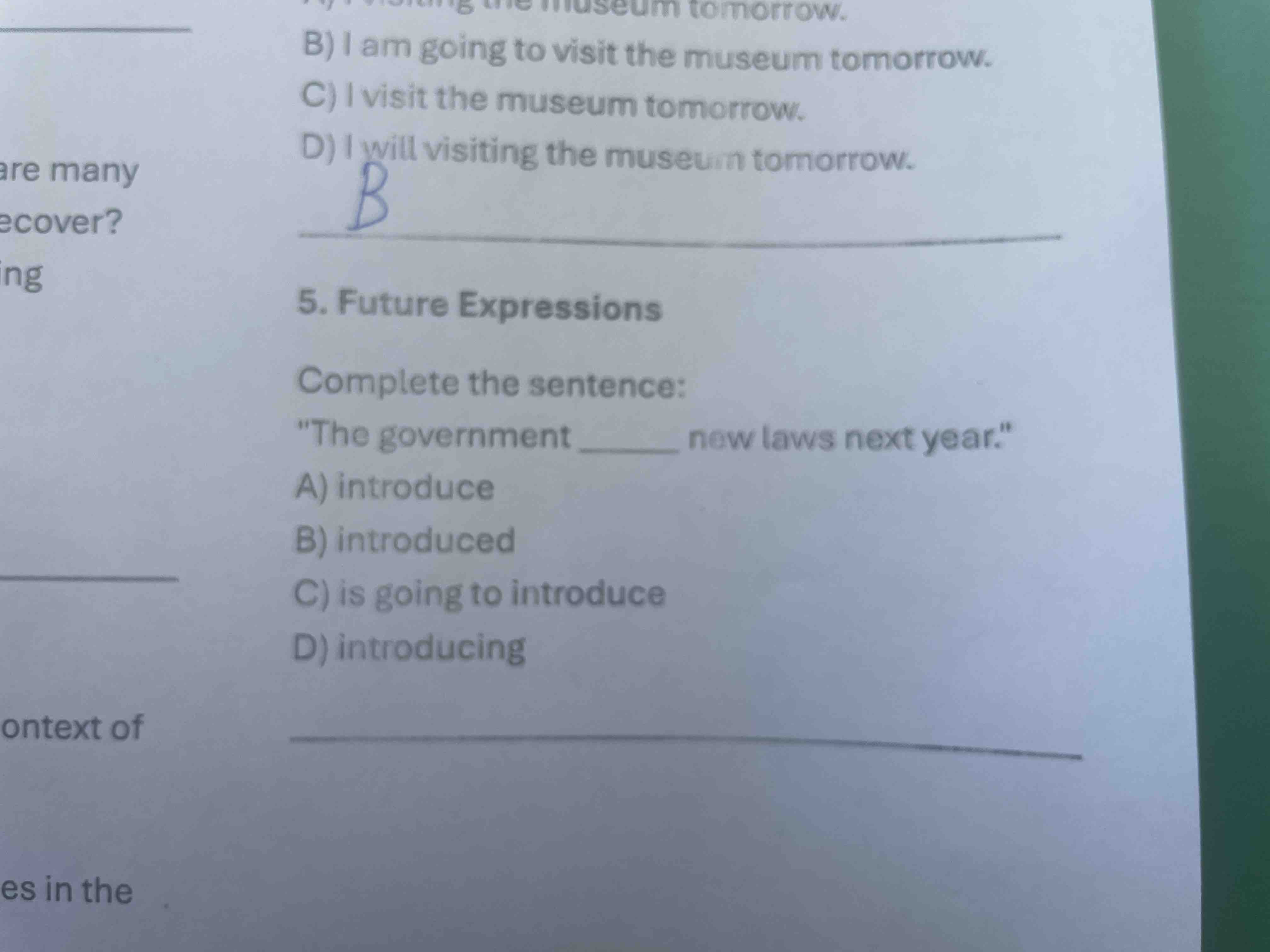
To solve this problem, we need to understand how to correctly complete the sentence about future actions. The sentence is: "The government ______ new laws next year."

Options Explanation:

A) Introduced - This is the past tense, which is not suitable for describing an action in the future.

B) Is introduced - This is the present progressive passive, which does not fit grammatically or contextually as it would suggest the laws are being introduced right now or habitually, not next year.

C) Is going to introduce - This is the future tense using "going to," which suggests a planned action in the future. It fits the context of the sentence perfectly.

D) Introducing - This is the present participle and doesn't fit grammatically as it would require a form of "to be" as a helper verb (e.g., "is introducing").

Conclusion:

The correct answer is C) "The government is going to introduce new laws next year."

This choice accurately reflects a planned future action, which matches the structure and meaning intended in the sentence.

Задай свой вопрос

Напиши любую задачу или вопрос, а нейросеть её решит

Похожие вопросы 15

Бесплатно Мобильное приложение ГДЗ
Мобильное приложение ГДЗ

Задавай вопросы искуcственному интеллекту текстом или фотографиями в приложении на iPhone или Android

qr-codegoogle-playapp-store

Саша — ассистент в телеграмме

4
To solve this problem, we need to understand how to correctly complete the sentence about future actions. The sentence is: "The government ______ new laws next year." ### Options Explanation: A) Introduced - This is the past tense, which is not suitable for describing an action in the future. B) Is introduced - This is the present progressive passive, which does not fit grammatically or contextually as it would suggest the laws are being introduced right now or habitually, not next year. C) Is going to introduce - This is the future tense using "going to," which suggests a planned action in the future. It fits the context of the sentence perfectly. D) Introducing - This is the present participle and doesn't fit grammatically as it would require a form of "to be" as a helper verb (e.g., "is introducing"). ### Conclusion: The correct answer is C) "The government **is going to introduce** new laws next year." This choice accurately reflects a planned future action, which matches the structure and meaning intended in the sentence.