Бесплатный урок с нашим репетитором!

Узнать подробнее

Новая Школа - онлайн-школа подготовки к ЕГЭ
При поддержке
Посмотреть все вопросы нейросети
Бесплатный пробный урок с репетитором

Узнай больше про репетиторов Новой Школы и запишись на бесплатный пробный урок. Мы проверим твой уровень знаний и составим план обучения по любому предмету и классу

Вопрос от Анонимного юзера 18 февраля 2025 05:54

4
Ответ нейросети

18 февраля 2025 05:54

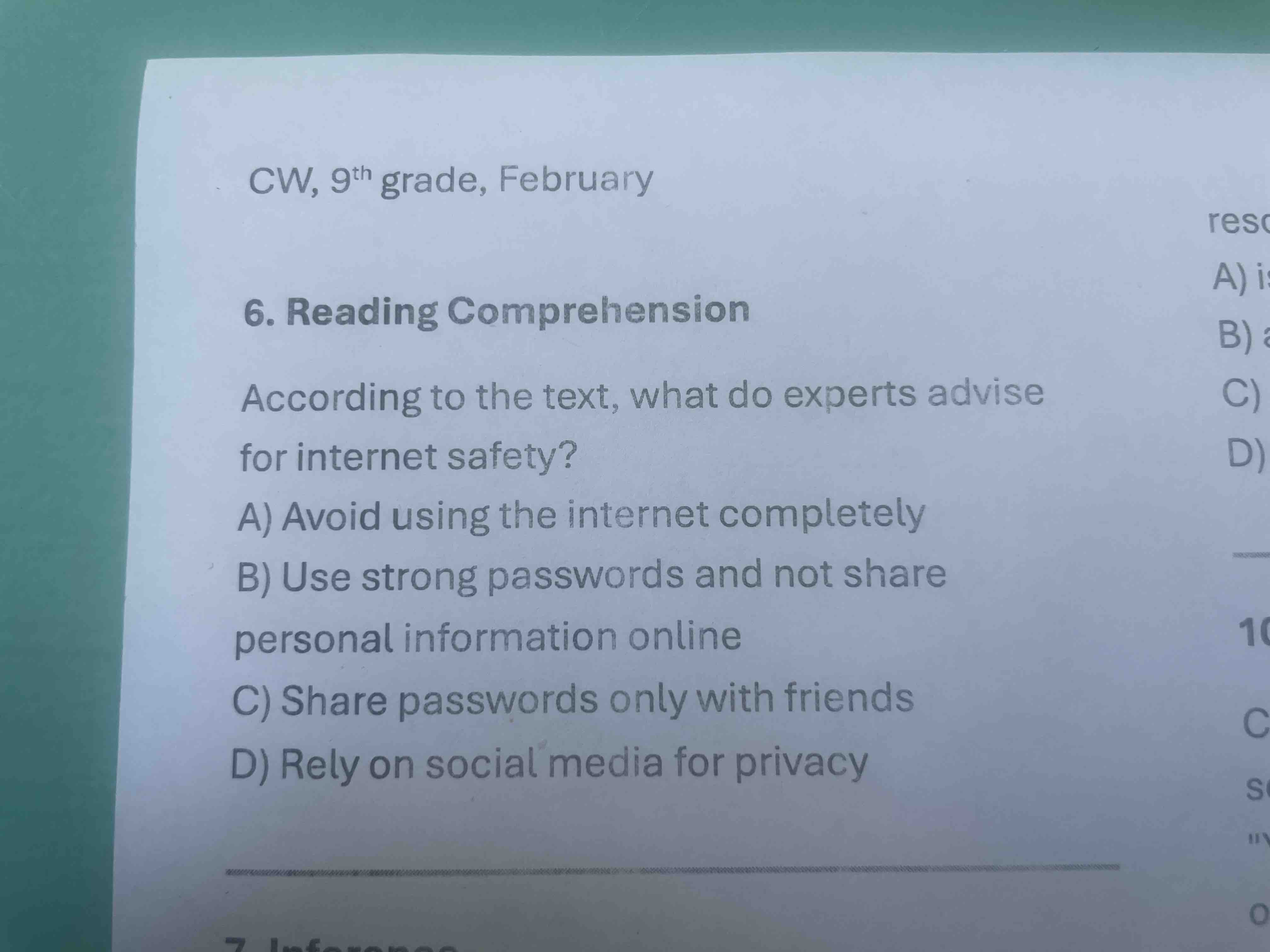
Based on the task and the question provided, let's analyze the options for internet safety according to the text:

  1. Avoid using the internet completely - This option is often unrealistic and impractical, as the internet is necessary for many aspects of modern life.

  2. Use strong passwords and not share personal information online - This is a widely recommended practice for internet safety. Strong passwords help protect against unauthorized access, and not sharing personal information helps protect privacy.

  3. Share passwords only with friends - This is generally not advised. Even with trusted friends, sharing passwords increases the risk of unauthorized access.

  4. Rely on social media for privacy - Social media platforms may not always prioritize users' privacy, and using them solely for privacy can be risky.

For internet safety, the most logical and commonly advised choice is B) Use strong passwords and not share personal information online. This aligns with best practices for maintaining personal security and privacy on the internet.

Задай свой вопрос

Напиши любую задачу или вопрос, а нейросеть её решит

Похожие вопросы 15

Бесплатно Мобильное приложение ГДЗ
Мобильное приложение ГДЗ

Задавай вопросы искуcственному интеллекту текстом или фотографиями в приложении на iPhone или Android

qr-codegoogle-playapp-store

Саша — ассистент в телеграмме

4
Based on the task and the question provided, let's analyze the options for internet safety according to the text: 1. **Avoid using the internet completely** - This option is often unrealistic and impractical, as the internet is necessary for many aspects of modern life. 2. **Use strong passwords and not share personal information online** - This is a widely recommended practice for internet safety. Strong passwords help protect against unauthorized access, and not sharing personal information helps protect privacy. 3. **Share passwords only with friends** - This is generally not advised. Even with trusted friends, sharing passwords increases the risk of unauthorized access. 4. **Rely on social media for privacy** - Social media platforms may not always prioritize users' privacy, and using them solely for privacy can be risky. For internet safety, the most logical and commonly advised choice is **B) Use strong passwords and not share personal information online**. This aligns with best practices for maintaining personal security and privacy on the internet.