Бесплатный урок с нашим репетитором!

Узнать подробнее

Новая Школа - онлайн-школа подготовки к ЕГЭ
При поддержке
Посмотреть все вопросы нейросети
Бесплатный пробный урок с репетитором

Узнай больше про репетиторов Новой Школы и запишись на бесплатный пробный урок. Мы проверим твой уровень знаний и составим план обучения по любому предмету и классу

Вопрос от Анонимного юзера 21 февраля 2025 21:54

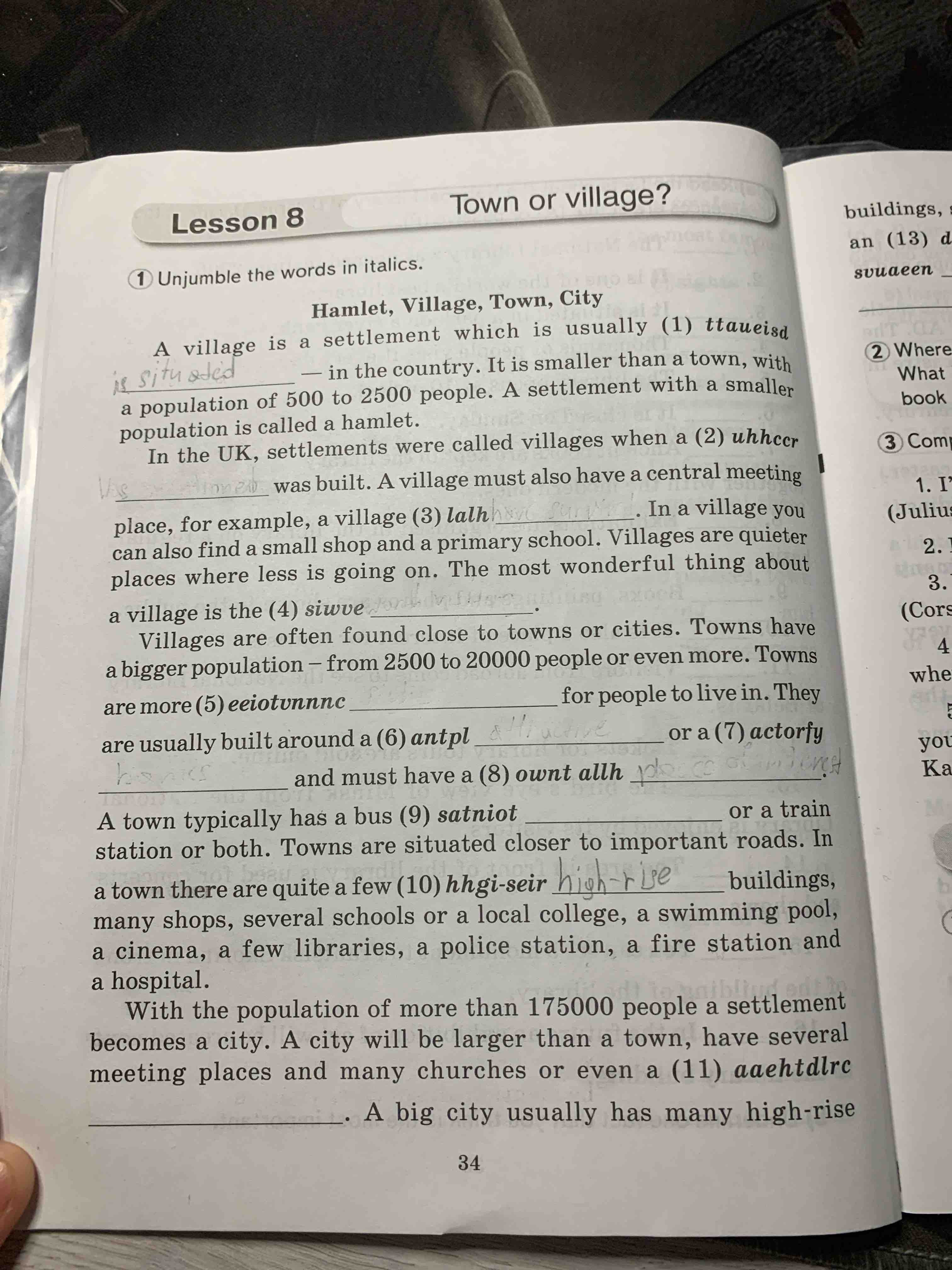
Вставьте пропущенные слова на английском
Ответ нейросети

21 февраля 2025 21:54

To complete the task of filling in the missing words in the text about villages, towns, and cities, let's look at the context provided in each blank space. Here’s a detailed step-by-step explanation:

  1. Blank (1)

    • Context: "A village is a settlement which is usually..."
    • Explanation: We are describing a common characteristic of villages.
    • Solution: "a" makes sense because it's a general statement about villages.
  2. Blank (2)

    • Context: "In the UK, settlements were called villages when a ___ was built."
    • Explanation: This sentence is referring to a historical context when certain structures defined a village.
    • Solution: "church" because churches were often central to villages historically.
  3. Blank (3)

    • Context: "A village is usually a quiet and peaceful place, for example, if the ____"
    • Explanation: The sentence describes quietness related to fewer people or activities.
    • Solution: "place" fits here to substantiate why a village is quiet and peaceful.
  4. Blank (4)

    • Context: "...a small school. Villages are quieter places where less is going on."
    • Explanation: This sentence describes characteristics typical of a village.
    • Solution: "primary" because primary schools are commonly found in villages.
  5. Blank (5)

    • Context: "Villages are often close to towns or cities. Towns have usually larger population...to 20000 people or even more."
    • Explanation: This describes towns in relation to villages and their populations.
    • Solution: "up" because populations range "up" to a certain number.
  6. Blank (6)

    • Context: "A town… and must have a ____ or"
    • Explanation: Discussing facilities a town typically has.
    • Solution: "market" because markets are common features in towns.
  7. Blank (7)

    • Context: "...and shops, some offices and a bus or train..."
    • Explanation: It lists common urban features.
    • Solution: "station" because transport stations are typical in towns.
  8. Blank (8)

    • Context: "A large town with a bigger population… becomes a ____."
    • Explanation: Discussing urban development when a town grows.
    • Solution: "city" because large towns develop into cities.
  9. Blank (9)

    • Context: "A big city usually has many high-rise ____"
    • Explanation: Describing city structures.
    • Solution: "buildings" because high-rise buildings are typical in big cities.
  10. Blank (10)

  • Context: "...where many people live, a shopping area, theatres..."
  • Explanation: Lists city features and facilities.
  • Solution: "and" links different features of the city.
  1. Blank (11)
  • Context: "a cathedral and many factories"
  • Explanation: Facilities found in cities.
  • Solution: "or" fits to provide an alternative listing of city features.

So the filled text would look like this:

  1. a
  2. church
  3. place
  4. primary
  5. up
  6. market
  7. station
  8. city
  9. buildings
  10. and
  11. or

This text gives a clear explanation of rural and urban distinctions based on population size, facilities, and structure types.

Задай свой вопрос

Напиши любую задачу или вопрос, а нейросеть её решит

Похожие вопросы 15

Бесплатно Мобильное приложение ГДЗ
Мобильное приложение ГДЗ

Задавай вопросы искуcственному интеллекту текстом или фотографиями в приложении на iPhone или Android

qr-codegoogle-playapp-store

Саша — ассистент в телеграмме

Вставьте пропущенные слова на английском
To complete the task of filling in the missing words in the text about villages, towns, and cities, let's look at the context provided in each blank space. Here’s a detailed step-by-step explanation: 1. **Blank (1)** - **Context:** "A village is a settlement which is usually..." - **Explanation:** We are describing a common characteristic of villages. - **Solution:** "a" makes sense because it's a general statement about villages. 2. **Blank (2)** - **Context:** "In the UK, settlements were called villages when a ___ was built." - **Explanation:** This sentence is referring to a historical context when certain structures defined a village. - **Solution:** "church" because churches were often central to villages historically. 3. **Blank (3)** - **Context:** "A village is usually a quiet and peaceful place, for example, if the ____" - **Explanation:** The sentence describes quietness related to fewer people or activities. - **Solution:** "place" fits here to substantiate why a village is quiet and peaceful. 4. **Blank (4)** - **Context:** "...a small school. Villages are quieter places where less is going on." - **Explanation:** This sentence describes characteristics typical of a village. - **Solution:** "primary" because primary schools are commonly found in villages. 5. **Blank (5)** - **Context:** "Villages are often close to towns or cities. Towns have usually larger population...to 20000 people or even more." - **Explanation:** This describes towns in relation to villages and their populations. - **Solution:** "up" because populations range "up" to a certain number. 6. **Blank (6)** - **Context:** "A town… and must have a ____ or" - **Explanation:** Discussing facilities a town typically has. - **Solution:** "market" because markets are common features in towns. 7. **Blank (7)** - **Context:** "...and shops, some offices and a bus or train..." - **Explanation:** It lists common urban features. - **Solution:** "station" because transport stations are typical in towns. 8. **Blank (8)** - **Context:** "A large town with a bigger population… becomes a ____." - **Explanation:** Discussing urban development when a town grows. - **Solution:** "city" because large towns develop into cities. 9. **Blank (9)** - **Context:** "A big city usually has many high-rise ____" - **Explanation:** Describing city structures. - **Solution:** "buildings" because high-rise buildings are typical in big cities. 10. **Blank (10)** - **Context:** "...where many people live, a shopping area, theatres..." - **Explanation:** Lists city features and facilities. - **Solution:** "and" links different features of the city. 11. **Blank (11)** - **Context:** "a cathedral and many factories" - **Explanation:** Facilities found in cities. - **Solution:** "or" fits to provide an alternative listing of city features. So the filled text would look like this: 1. a 2. church 3. place 4. primary 5. up 6. market 7. station 8. city 9. buildings 10. and 11. or This text gives a clear explanation of rural and urban distinctions based on population size, facilities, and structure types.