Бесплатный урок с нашим репетитором!

Узнать подробнее

Новая Школа - онлайн-школа подготовки к ЕГЭ
При поддержке
Посмотреть все вопросы нейросети
Бесплатный пробный урок с репетитором

Узнай больше про репетиторов Новой Школы и запишись на бесплатный пробный урок. Мы проверим твой уровень знаний и составим план обучения по любому предмету и классу

Вопрос от Анонимного юзера 22 февраля 2025 18:36

Выполни задание
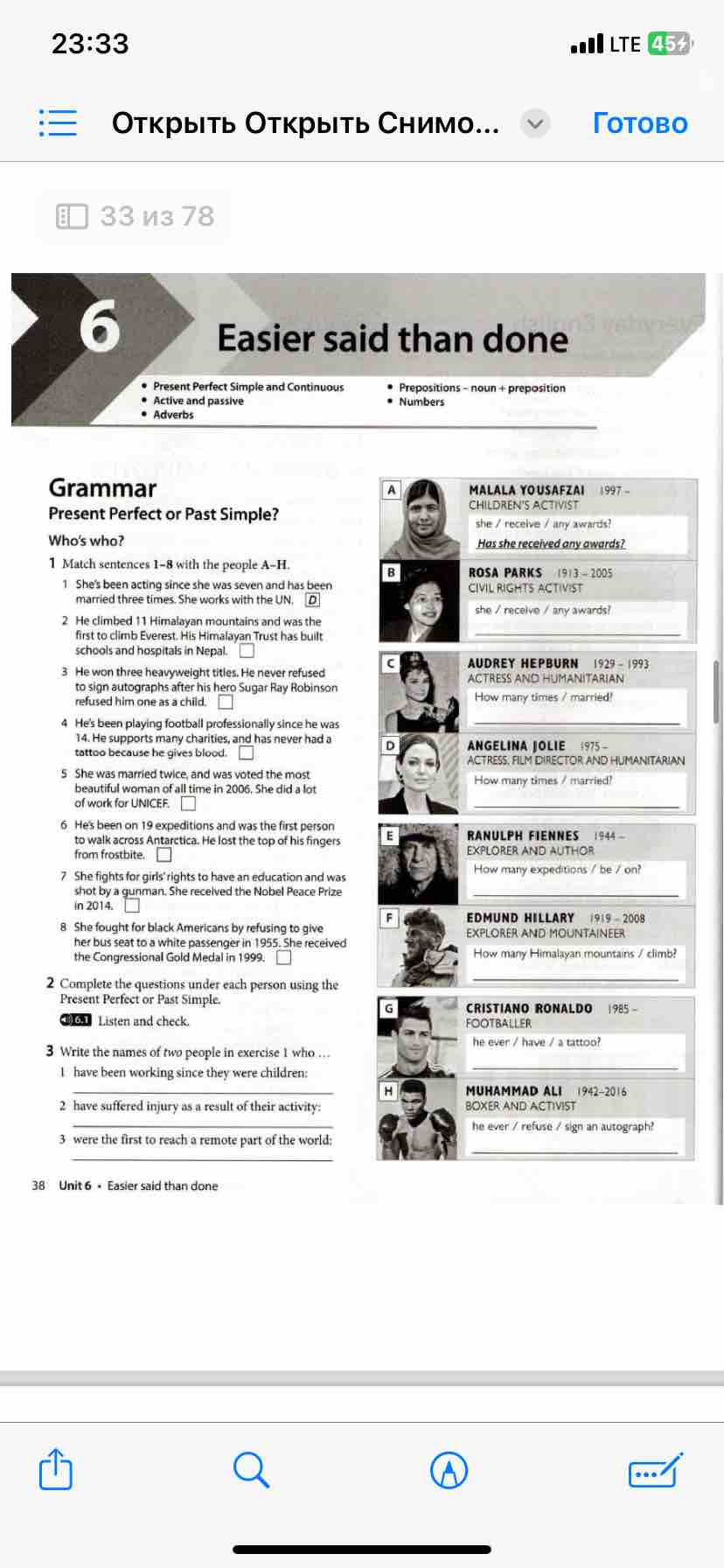
Ответ нейросети

22 февраля 2025 18:36

To complete the given exercise, we need to determine whether to use the Present Perfect or Past Simple tense in various contexts. Here is a breakdown of when to use each tense:

Present Perfect

  • Usage: This tense is used for actions that started in the past and continue to the present, or for past actions where time is not specified.
  • Form: have/has + past participle (e.g., have gone, has visited)

Past Simple

  • Usage: This tense is used for completed actions in the past with a specific time mentioned or understood.
  • Form: past form of the verb (e.g., went, visited)

Task Completion

Below is the solution for each part of the task as depicted on the sheet:

1. Fill in the blanks with the correct tense:

  1. Audrey Hepburn lived in London from 1948 to 1959. (Past Simple)
  2. Edmund Hillary climbed Mount Everest in 1953. (Past Simple)
  3. Amelia Earhart disappeared in 1937. (Past Simple)
  4. Cristiano Ronaldo has played for several clubs. (Present Perfect)

2. Explanation of responses:

  • Audrey Hepburn: The phrase indicates a specific period in the past, so Past Simple is used.
  • Edmund Hillary: The action happened in a specific year in the past, so we use the Past Simple.
  • Amelia Earhart: A specific event in the past, using Past Simple.
  • Cristiano Ronaldo: The action is ongoing, or the specific time isn't mentioned, so Present Perfect is appropriate.

Conclusion

For each sentence, identify whether the action is completed or ongoing and whether a specific time is mentioned, to determine the correct tense. This approach helps clarify when to use Present Perfect versus Past Simple effectively.

Задай свой вопрос

Напиши любую задачу или вопрос, а нейросеть её решит

Похожие вопросы 15

Бесплатно Мобильное приложение ГДЗ
Мобильное приложение ГДЗ

Задавай вопросы искуcственному интеллекту текстом или фотографиями в приложении на iPhone или Android

qr-codegoogle-playapp-store

Саша — ассистент в телеграмме

Выполни задание
To complete the given exercise, we need to determine whether to use the Present Perfect or Past Simple tense in various contexts. Here is a breakdown of when to use each tense: ### Present Perfect - **Usage**: This tense is used for actions that started in the past and continue to the present, or for past actions where time is not specified. - **Form**: have/has + past participle (e.g., have gone, has visited) ### Past Simple - **Usage**: This tense is used for completed actions in the past with a specific time mentioned or understood. - **Form**: past form of the verb (e.g., went, visited) ### Task Completion Below is the solution for each part of the task as depicted on the sheet: #### 1. Fill in the blanks with the correct tense: 1. Audrey Hepburn **lived** in London from 1948 to 1959. (Past Simple) 2. Edmund Hillary **climbed** Mount Everest in 1953. (Past Simple) 3. Amelia Earhart **disappeared** in 1937. (Past Simple) 4. Cristiano Ronaldo **has played** for several clubs. (Present Perfect) #### 2. Explanation of responses: - **Audrey Hepburn**: The phrase indicates a specific period in the past, so Past Simple is used. - **Edmund Hillary**: The action happened in a specific year in the past, so we use the Past Simple. - **Amelia Earhart**: A specific event in the past, using Past Simple. - **Cristiano Ronaldo**: The action is ongoing, or the specific time isn't mentioned, so Present Perfect is appropriate. ### Conclusion For each sentence, identify whether the action is completed or ongoing and whether a specific time is mentioned, to determine the correct tense. This approach helps clarify when to use Present Perfect versus Past Simple effectively.