

Реши пожалуйста

Ответ нейросети
04 марта 2025 13:03
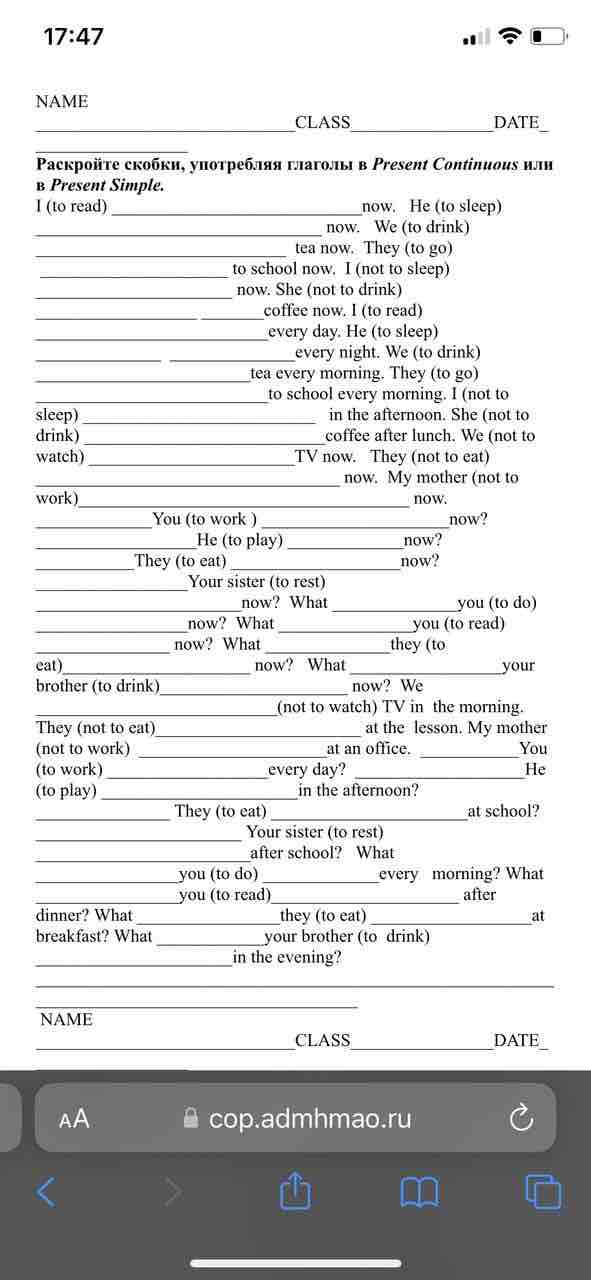
Для выполнения задания нужно вставить глаголы в скобках в форме Present Continuous или Present Simple. Посмотрим, как это делается для каждого предложения:
now - указывает на текущее время. Используем Present Continuous: "He is sleeping now."
Они учатся утром и работают днём. Это регулярное действие, используем Present Simple: "They study in the morning and they work in the afternoon."
"Don't go to her room now." - ситуация сейчас, не нужно менять форму.
every day (I, drink, coffee) - регулярное действие, Present Simple: "I drink coffee every day."
now (I, drink, tea) - действие сейчас, Present Continuous: "I am drinking tea now."
Все дни в неделю он ходит на учебу. Регулярное действие, Present Simple: "He goes to school every weekday."
На данный момент не нужно звонить, он пишет книгу. Present Continuous: "He is writing a book now. Don't disturb him."
Каждый вечер они читают книги. Регулярное действие, Present Simple: "They read books every evening."
Jane at the moment (not, watch) TV. - Present Continuous: "Jane is not watching TV at the moment."
(you, read) - вопросительное предложение сейчас. Present Continuous: "Are you reading?"
"Yes, I (to read)" - утвердительный ответ сейчас. Present Continuous: "Yes, I am reading."
"Who (he, wait) for now?" - вопрос о текущем действии. Present Continuous: "Who is he waiting for now?"
"He (wait) for Tom. They (to work) together." - оба действия происходят сейчас. Present Continuous: "He is waiting for Tom. They are working together."
"The children (play) in the garden now." - действие сейчас. Present Continuous: "The children are playing in the garden now."
"What (they, do) now?" - вопрос о текущем действии. Present Continuous: "What are they doing now?"
"How often (they, go) to the theatre?" - вопрос о привычном действии. Present Simple: "How often do they go to the theatre?"
"How long (it, take) you to get to school?" - вопрос о привычной длительности. Present Simple: "How long does it take you to get to school?"
"How often (you, write) tests?" - вопрос о регулярности. Present Simple: "How often do you write tests?"
"Where (he, work) now?" - вопрос о текущем месте работы. Present Continuous: "Where is he working now?"
"What (they, talk) about now?" - вопрос о текущем действии. Present Continuous: "What are they talking about now?"
"Where (we, go) in the evening?" - вопрос о текущих планах. Present Continuous: "Where are we going in the evening?"
"Who (to play) now?" - вопрос о текущем действии. Present Continuous: "Who is playing now?"
"Who (he, speak) to now?" - вопрос о текущем действии. Present Continuous: "Who is he speaking to now?"
"They (not, wear) uniform today." - действие сегодня, используем Present Continuous: "They are not wearing uniform today."
"Why (it, rain) so often here?" - привычное явление, вопрос об общем свойстве. Present Simple: "Why does it rain so often here?"
"What (you, do) in the morning?" - вопрос о привычках. Present Simple: "What do you do in the morning?"
"The children (often, eat) ice cream in the summer." - привычное действие. Present Simple: "The children often eat ice cream in the summer."
"He (play) usually, the piano in the lesson. My mother (learn) to sing." - оба действия регулярные. Present Simple: "He usually plays the piano in the lesson. My mother learns to sing."
"When (they, go) to walk?" - вопрос о времени обычного действия. Present Simple: "When do they go to walk?"
"Today the bus (stop) at the corner of my street." - временное изменение, используем Present Continuous: "Today the bus is stopping at the corner of my street."
"Now (I, write)." - действие сейчас. Present Continuous: "Now I am writing."
"They (do) at school now." - действие сейчас. Present Continuous: "They are doing at school now."
"What (your, pet, eat)?" - вопрос о текущем действии. Present Continuous: "What is your pet eating?"
"My pet (not eat) eggs." - привычное действие. Present Simple: "My pet does not eat eggs."
"Where (you, read) after dinner?" - вопрос о привычках, Present Simple: "Where do you read after dinner?"
"Where (they, eat) at breakfast?" - вопрос о привычках, Present Simple: "Where do they eat at breakfast?"
Итак, каждое предложение было разобрано и для каждого найдена соответствующая форма глагола в нужном времени.
Понравился ответ?
Задай свой вопрос
Напиши любую задачу или вопрос, а нейросеть её решит


