Бесплатный урок с нашим репетитором!

Узнать подробнее

Новая Школа - онлайн-школа подготовки к ЕГЭ
При поддержке
Посмотреть все вопросы нейросети
Бесплатный пробный урок с репетитором

Узнай больше про репетиторов Новой Школы и запишись на бесплатный пробный урок. Мы проверим твой уровень знаний и составим план обучения по любому предмету и классу

Вопрос от +79194634826 Имя 15 марта 2025 06:26

Ответить на вопросы

Ответ нейросети

15 марта 2025 06:26

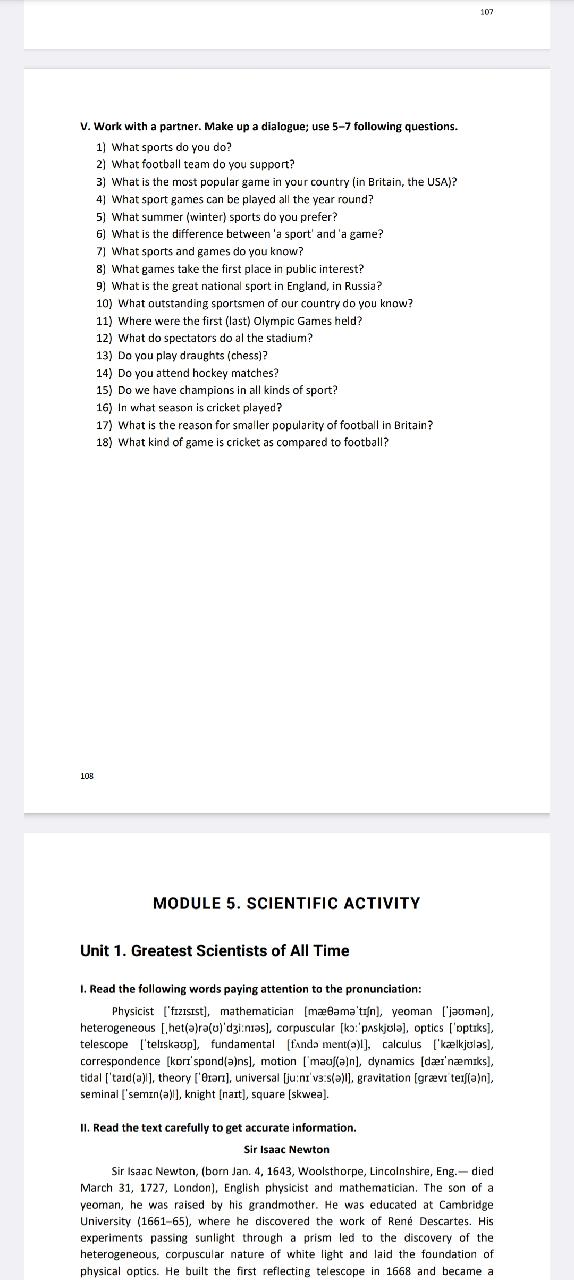
To complete this task, we need to address the questions provided in the exercise section of the document. Here is a breakdown of possible responses and explanations for creating dialogues based on these questions:

Dialogue Construction

  1. What sports do you do?

    • Response: I play soccer and occasionally go swimming.
    • Explanation: Mentioning specific sports activities provides a starting point for a conversation about interests.
  2. What sports are popular in your country, in Britain, the USA?

    • Response: In my country, soccer is very popular. In Britain, people love football (soccer) and cricket, while in the USA, American football and basketball are huge.
    • Explanation: This answer highlights cultural differences and common interests across countries.
  3. What is the most popular game in the world?

    • Response: Soccer is considered the most popular game worldwide due to its global fan base.
    • Explanation: Soccer has widespread international appeal, making it a good choice for this question.
  4. What is the national game of your country?

    • Response: The national game of my country is [insert relevant sport].
    • Explanation: Specify the traditional or most recognized sport associated with your country.
  5. What sports do they play in the Olympic Games?

    • Response: The Olympic Games include a wide variety of sports such as athletics, gymnastics, and swimming.
    • Explanation: Highlighting the diversity of the sports can stimulate further conversation.
  6. What is your favorite (summer, winter) sport?

    • Response: My favorite summer sport is tennis, and my favorite winter sport is skiing.
    • Explanation: Personal preferences help to personalize the dialogue.
  7. When were the first (Asia) Olympic Games held?

    • Response: The first Asian Games were held in 1951 in New Delhi.
    • Explanation: Providing historical context adds depth to the conversation.
  8. Why do you go in for sports (games)?

    • Response: I participate in sports to stay healthy and because I enjoy the competition.
    • Explanation: This personal perspective explains motivational factors.
  9. Do you like watching sport competitions on TV?

    • Response: Yes, I enjoy watching football and tennis matches on TV.
    • Explanation: Sharing interests in televised sports can help connect over shared viewing experiences.
  10. What outstanding sportsmen of your country do you know?

    • Response: [Insert known athletes], like [famous athlete], are quite famous.
    • Explanation: Mention names of renowned athletes to show awareness of national sports figures.
  11. Who was the first (Asia) champion?

    • Response: [Research and specify the relevant champion based on the sport and context.]
    • Explanation: Providing accurate historical information here enriches understanding.
  12. What games does your friend enjoy playing?

    • Response: My friend enjoys playing basketball and volleyball.
    • Explanation: Using a friend’s interests to further the dialogue.
  13. Do you know outstanding sportsmen in Britain?

    • Response: Yes, athletes like Mo Farah and Andy Murray are well-known internationally.
    • Explanation: Shows global recognition of foreign athletes.
  14. What is the reason for smaller popularity of football in Britain?

    • Response: Actually, football is very popular in Britain; in fact, it’s one of the most popular sports there.
    • Explanation: Corrects the misconception if needed and provides accurate insights.
  15. What kind of games is compared to football?

    • Response: Rugby is often compared to football due to the similar objectives of scoring goals or points.
    • Explanation: Provides a comparative analysis, promoting a deeper understanding of sports similarities.

These dialogues can serve as a basis for constructing responses around the listed questions. It’s designed to cover a broad understanding and help the student craft engaging, informative conversations.

Задай свой вопрос

Напиши любую задачу или вопрос, а нейросеть её решит

Похожие вопросы 15

Бесплатно Мобильное приложение ГДЗ
Мобильное приложение ГДЗ

Задавай вопросы искуcственному интеллекту текстом или фотографиями в приложении на iPhone или Android

qr-codegoogle-playapp-store

Саша — ассистент в телеграмме

ответить на вопросы
To complete this task, we need to address the questions provided in the exercise section of the document. Here is a breakdown of possible responses and explanations for creating dialogues based on these questions: ### Dialogue Construction 1. **What sports do you do?** - **Response:** I play soccer and occasionally go swimming. - **Explanation:** Mentioning specific sports activities provides a starting point for a conversation about interests. 2. **What sports are popular in your country, in Britain, the USA?** - **Response:** In my country, soccer is very popular. In Britain, people love football (soccer) and cricket, while in the USA, American football and basketball are huge. - **Explanation:** This answer highlights cultural differences and common interests across countries. 3. **What is the most popular game in the world?** - **Response:** Soccer is considered the most popular game worldwide due to its global fan base. - **Explanation:** Soccer has widespread international appeal, making it a good choice for this question. 4. **What is the national game of your country?** - **Response:** The national game of my country is [insert relevant sport]. - **Explanation:** Specify the traditional or most recognized sport associated with your country. 5. **What sports do they play in the Olympic Games?** - **Response:** The Olympic Games include a wide variety of sports such as athletics, gymnastics, and swimming. - **Explanation:** Highlighting the diversity of the sports can stimulate further conversation. 6. **What is your favorite (summer, winter) sport?** - **Response:** My favorite summer sport is tennis, and my favorite winter sport is skiing. - **Explanation:** Personal preferences help to personalize the dialogue. 7. **When were the first (Asia) Olympic Games held?** - **Response:** The first Asian Games were held in 1951 in New Delhi. - **Explanation:** Providing historical context adds depth to the conversation. 8. **Why do you go in for sports (games)?** - **Response:** I participate in sports to stay healthy and because I enjoy the competition. - **Explanation:** This personal perspective explains motivational factors. 9. **Do you like watching sport competitions on TV?** - **Response:** Yes, I enjoy watching football and tennis matches on TV. - **Explanation:** Sharing interests in televised sports can help connect over shared viewing experiences. 10. **What outstanding sportsmen of your country do you know?** - **Response:** [Insert known athletes], like [famous athlete], are quite famous. - **Explanation:** Mention names of renowned athletes to show awareness of national sports figures. 11. **Who was the first (Asia) champion?** - **Response:** [Research and specify the relevant champion based on the sport and context.] - **Explanation:** Providing accurate historical information here enriches understanding. 12. **What games does your friend enjoy playing?** - **Response:** My friend enjoys playing basketball and volleyball. - **Explanation:** Using a friend’s interests to further the dialogue. 13. **Do you know outstanding sportsmen in Britain?** - **Response:** Yes, athletes like Mo Farah and Andy Murray are well-known internationally. - **Explanation:** Shows global recognition of foreign athletes. 14. **What is the reason for smaller popularity of football in Britain?** - **Response:** Actually, football is very popular in Britain; in fact, it’s one of the most popular sports there. - **Explanation:** Corrects the misconception if needed and provides accurate insights. 15. **What kind of games is compared to football?** - **Response:** Rugby is often compared to football due to the similar objectives of scoring goals or points. - **Explanation:** Provides a comparative analysis, promoting a deeper understanding of sports similarities. These dialogues can serve as a basis for constructing responses around the listed questions. It’s designed to cover a broad understanding and help the student craft engaging, informative conversations.