Бесплатный урок с нашим репетитором!

Узнать подробнее

Новая Школа - онлайн-школа подготовки к ЕГЭ
При поддержке
Посмотреть все вопросы нейросети
Бесплатный пробный урок с репетитором

Узнай больше про репетиторов Новой Школы и запишись на бесплатный пробный урок. Мы проверим твой уровень знаний и составим план обучения по любому предмету и классу

Вопрос от Анонимного юзера 31 марта 2025 15:53

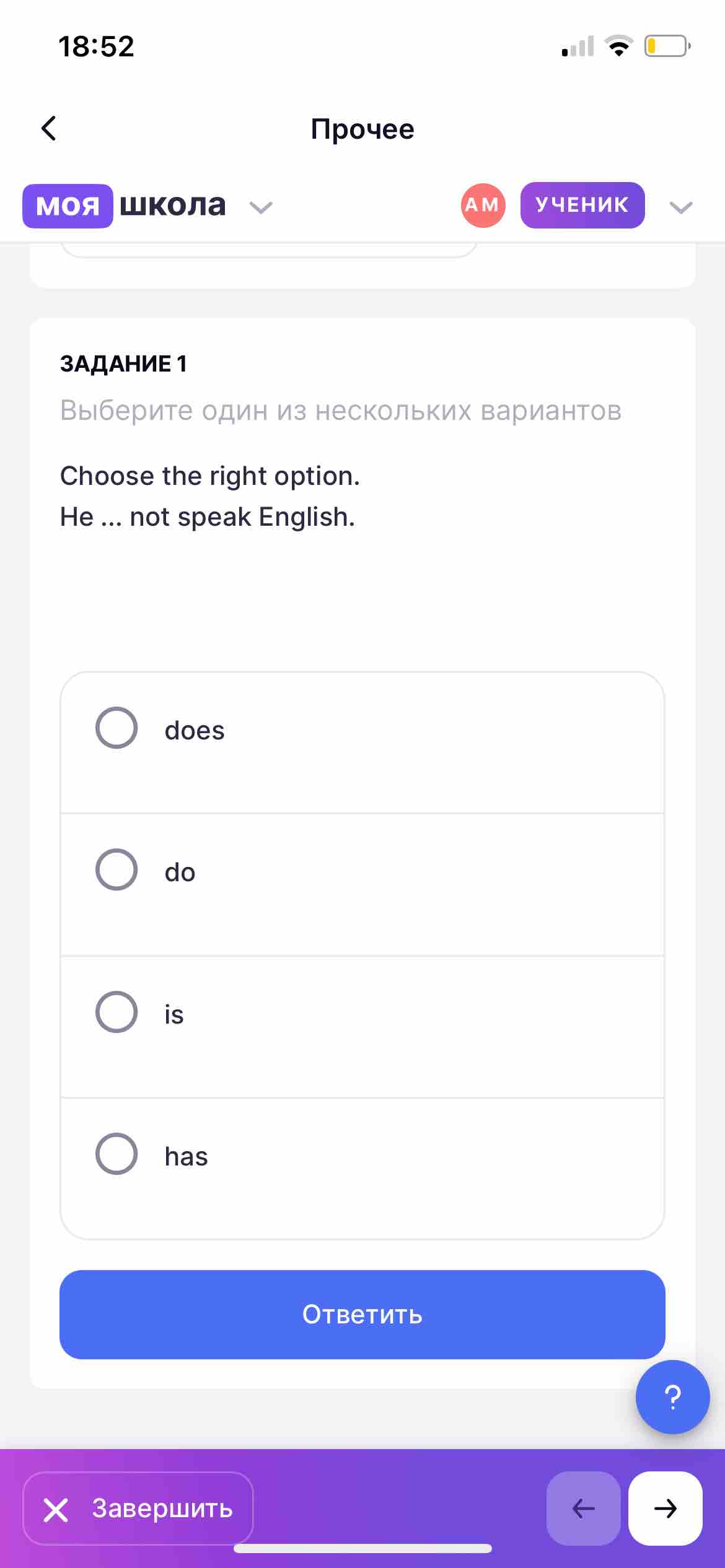
Choose the right option He … not speak English
Ответ нейросети

31 марта 2025 15:53

To choose the correct option to complete the sentence "He … not speak English," we need to consider the grammar rules of present tense for third person singular subjects (he, she, it).

The correct auxiliary verb to use for third person singular in the present simple tense when forming a negative sentence is "does."

Here's a breakdown:

  • "He does not speak English" is the correct form. We use "does" with "he" because it is the standard auxiliary verb for negative sentences in third person singular.
  • "Do" is incorrect for third person singular; it is used with "I," "you," "we," and "they."
  • "Is" and "has" are not used for this type of sentence structure. "Is" is used as a main verb or to form present continuous, and "has" is used in present perfect or as a main verb indicating possession.

Therefore, the correct option is:

  • "does"

Complete sentence: "He does not speak English."

Задай свой вопрос

Напиши любую задачу или вопрос, а нейросеть её решит

Похожие вопросы 15

Бесплатно Мобильное приложение ГДЗ
Мобильное приложение ГДЗ

Задавай вопросы искуcственному интеллекту текстом или фотографиями в приложении на iPhone или Android

qr-codegoogle-playapp-store

Саша — ассистент в телеграмме

Choose the right option He … not speak English
To choose the correct option to complete the sentence "He … not speak English," we need to consider the grammar rules of present tense for third person singular subjects (he, she, it). The correct auxiliary verb to use for third person singular in the present simple tense when forming a negative sentence is "does." Here's a breakdown: - "He does not speak English" is the correct form. We use "does" with "he" because it is the standard auxiliary verb for negative sentences in third person singular. - "Do" is incorrect for third person singular; it is used with "I," "you," "we," and "they." - "Is" and "has" are not used for this type of sentence structure. "Is" is used as a main verb or to form present continuous, and "has" is used in present perfect or as a main verb indicating possession. Therefore, the correct option is: - "does" Complete sentence: "He does not speak English."