Бесплатный урок с нашим репетитором!

Узнать подробнее

Новая Школа - онлайн-школа подготовки к ЕГЭ
При поддержке
Посмотреть все вопросы нейросети
Бесплатный пробный урок с репетитором

Узнай больше про репетиторов Новой Школы и запишись на бесплатный пробный урок. Мы проверим твой уровень знаний и составим план обучения по любому предмету и классу

Вопрос от Анонимного юзера 01 апреля 2025 16:50

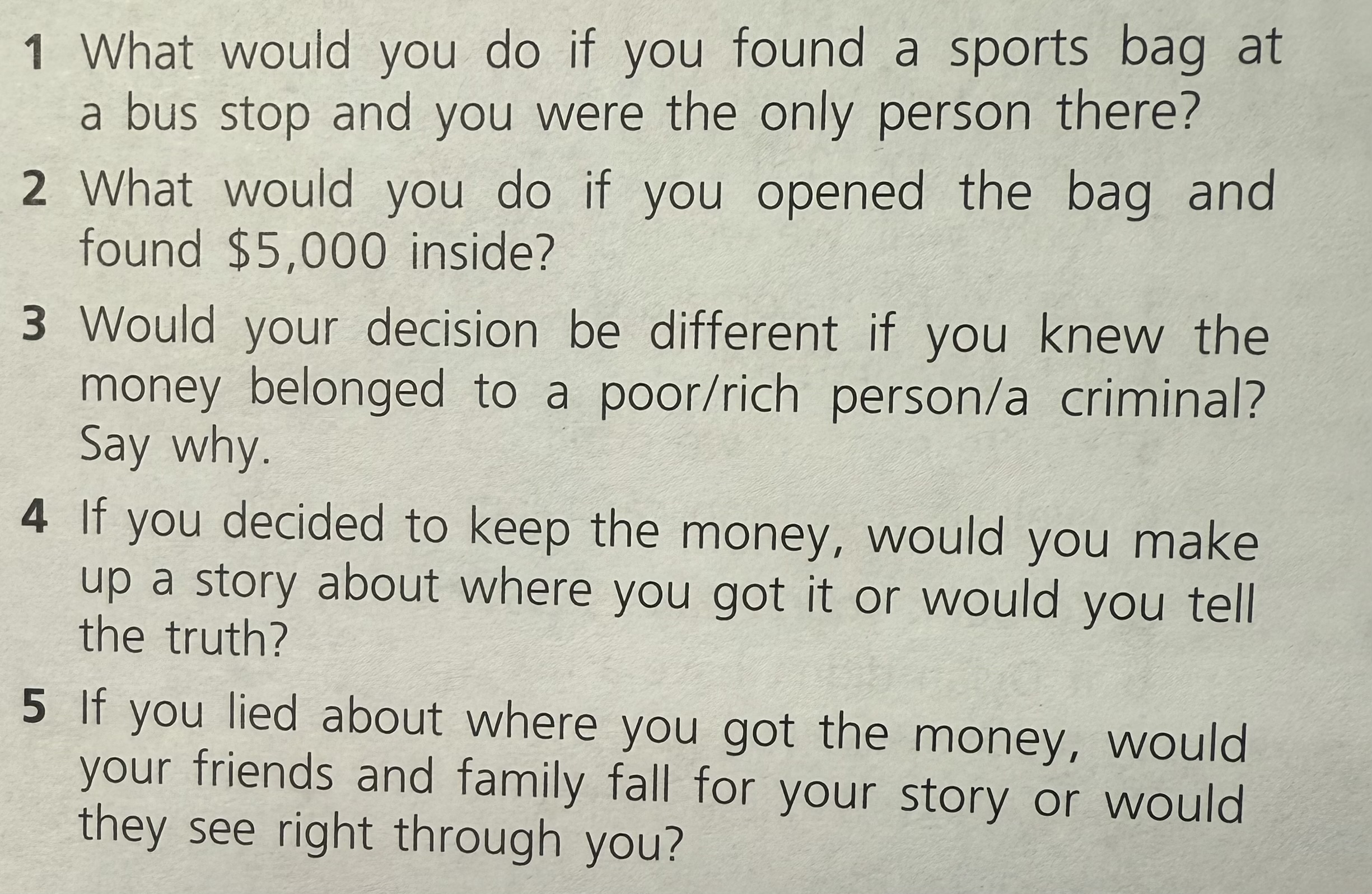
Ответь на вопросы

Ответ нейросети

01 апреля 2025 16:50

To address these questions thoughtfully, you would want to approach them by reflecting on ethical principles and personal values. Here's a structured way to think about each question:

  1. What would you do if you found a sports bag at a bus stop and you were the only person there?

    • Search for Identification: First, you might consider checking if there are any identifiable items that could help locate the owner, such as an ID card or contact information.
    • Contact Authorities: Another step is to notify local authorities or lost and found services to report the item and hand it over, ensuring that it's returned to its rightful owner.
    • Wait Nearby: You might decide to wait nearby for a short period to see if anyone returns for it.
  2. What would you do if you opened the bag and found $5,000 inside?

    • Avoid Touching the Money: Handle the situation carefully, perhaps without directly interacting with the money more than necessary.
    • Report It: Contact the police or local lost and found services immediately, informing them of the exact details and location.
  3. Would your decision be different if you knew the money belonged to a poor/rich person/a criminal? Say why.

    • Ethical Consistency: Ideally, your decision should not be influenced by the owner’s financial status or perceived character. The ethical action is to return the money regardless of who it belongs to.
    • Legal and Ethical Obligations: You have a responsibility to act ethically by attempting to reunite the money with its rightful owner through appropriate channels.
  4. If you decided to keep the money, would you make up a story about where you got it or would you tell the truth?

    • Integrity: Consider the importance of honesty and the potential consequences of lying. The ethical choice is to be truthful about the situation.
    • Long-Term Consequences: Lies may eventually unravel, leading to potential legal consequences and impacting personal relationships.
  5. If you lied about where you got the money, would your friends and family fall for your story or would they see right through you?

    • Trust and Relationships: Consider how well your friends and family know you and whether your actions would align with their perception of your character.
    • Transparency: Being transparent and honest is crucial for maintaining trust and healthy relationships. They might either believe you initially or may suspect inconsistencies in your story.

These questions aim to prompt introspection about ethical decision-making and personal integrity. Reflecting honestly will aid in understanding your moral compass.

Задай свой вопрос

Напиши любую задачу или вопрос, а нейросеть её решит

Похожие вопросы 15

Бесплатно Мобильное приложение ГДЗ
Мобильное приложение ГДЗ

Задавай вопросы искуcственному интеллекту текстом или фотографиями в приложении на iPhone или Android

qr-codegoogle-playapp-store

Саша — ассистент в телеграмме

Ответь на вопросы
To address these questions thoughtfully, you would want to approach them by reflecting on ethical principles and personal values. Here's a structured way to think about each question: 1. **What would you do if you found a sports bag at a bus stop and you were the only person there?** - **Search for Identification**: First, you might consider checking if there are any identifiable items that could help locate the owner, such as an ID card or contact information. - **Contact Authorities**: Another step is to notify local authorities or lost and found services to report the item and hand it over, ensuring that it's returned to its rightful owner. - **Wait Nearby**: You might decide to wait nearby for a short period to see if anyone returns for it. 2. **What would you do if you opened the bag and found $5,000 inside?** - **Avoid Touching the Money**: Handle the situation carefully, perhaps without directly interacting with the money more than necessary. - **Report It**: Contact the police or local lost and found services immediately, informing them of the exact details and location. 3. **Would your decision be different if you knew the money belonged to a poor/rich person/a criminal? Say why.** - **Ethical Consistency**: Ideally, your decision should not be influenced by the owner’s financial status or perceived character. The ethical action is to return the money regardless of who it belongs to. - **Legal and Ethical Obligations**: You have a responsibility to act ethically by attempting to reunite the money with its rightful owner through appropriate channels. 4. **If you decided to keep the money, would you make up a story about where you got it or would you tell the truth?** - **Integrity**: Consider the importance of honesty and the potential consequences of lying. The ethical choice is to be truthful about the situation. - **Long-Term Consequences**: Lies may eventually unravel, leading to potential legal consequences and impacting personal relationships. 5. **If you lied about where you got the money, would your friends and family fall for your story or would they see right through you?** - **Trust and Relationships**: Consider how well your friends and family know you and whether your actions would align with their perception of your character. - **Transparency**: Being transparent and honest is crucial for maintaining trust and healthy relationships. They might either believe you initially or may suspect inconsistencies in your story. These questions aim to prompt introspection about ethical decision-making and personal integrity. Reflecting honestly will aid in understanding your moral compass.