Бесплатный урок с нашим репетитором!

Узнать подробнее

Новая Школа - онлайн-школа подготовки к ЕГЭ
При поддержке
Посмотреть все вопросы нейросети
Бесплатный пробный урок с репетитором

Узнай больше про репетиторов Новой Школы и запишись на бесплатный пробный урок. Мы проверим твой уровень знаний и составим план обучения по любому предмету и классу

Вопрос от Анонимного юзера 07 мая 2025 00:07

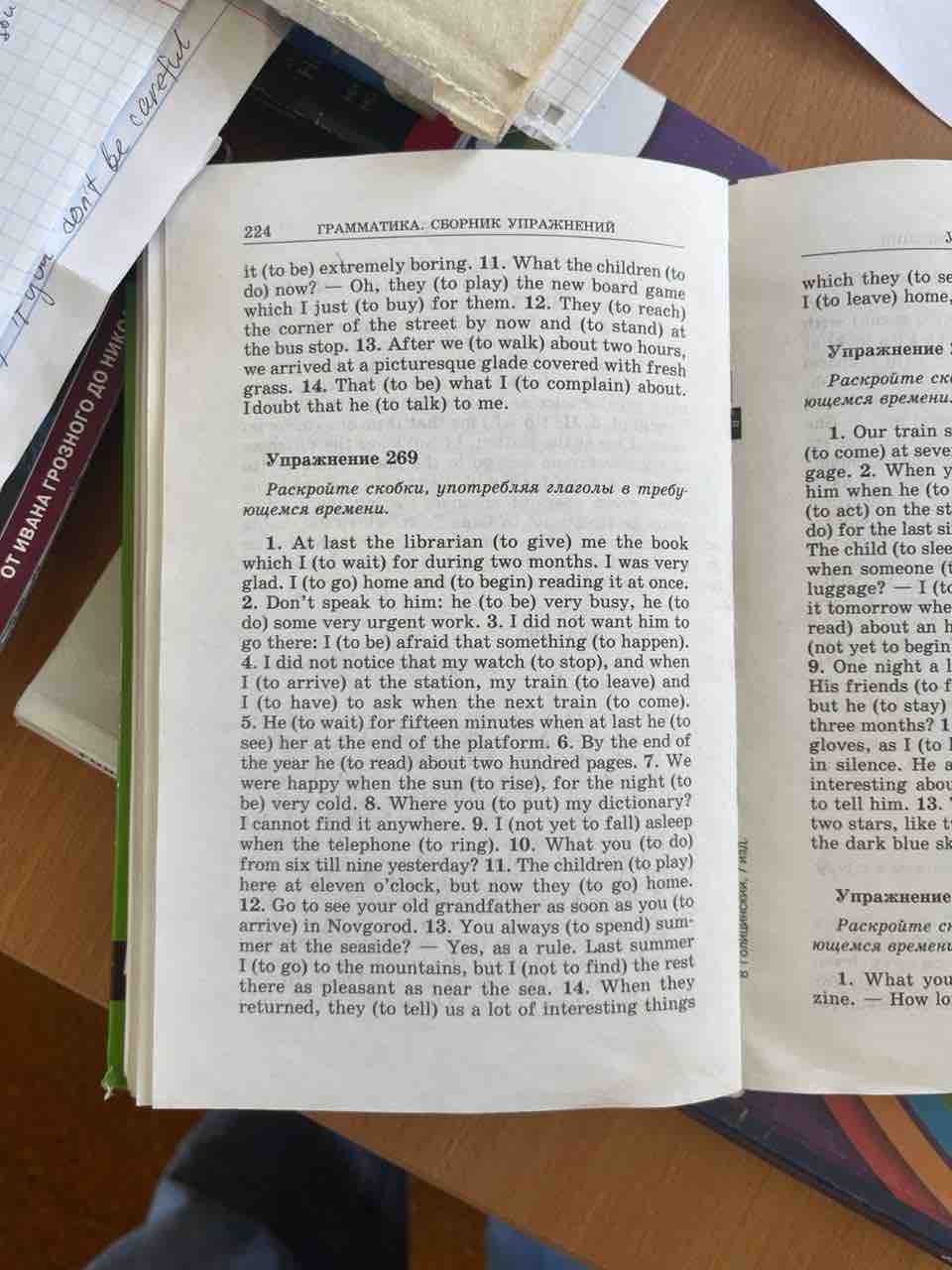
Раскройте скобки, употребляя глаголы в требу- ющемся времени. 1. At last the librarian (to give) me the book which I (to wait) for during two months. I was very glad. I (to go) home and (to begin) reading it at once. 2. Don't speak to him: he (to be) very busy, he (to do) some very urgent work. 3. I did not want him to go there: I (to be) afraid that something (to happen). 4. I did not notice that my watch (to stop), and when I (to arrive) at the station, my train (to leave) and I (to have to ask when the next train to come). 5. He (to wait) for fifteen minutes when at last he (to see her at the end of the platform. 6. By the end of the year he (to read) about two hundred pages. 7. We were happy when the sun (to rise), for the night (to be very cold. 8. Where you (to put) my dictionary? I cannot find it anywhere. 9. I (not yet to fall) asleep when the telephone (to ring). 10. What you (to do) from six till nine yesterday? 11. The children (to play) here at eleven o'clock, but now they (to go) home. 12. Go to see your old grandfather as soon as you (to arrive) in Novgorod. 13. You always (to spend) summer at the seaside? - Yes, as a rule. Last summer I (to go) to the mountains, but I (not to find) the rest there as pleasant as near the sea. 14. When they returned, they (to tell) us a lot of interesting things which they (to see) during their journey. 15. When I (to leave) home, it (to rain).
Ответ нейросети

07 мая 2025 00:07

Вот подробное решение с правильным спряжением глаголов в нужных временах:

  1. At last the librarian gave me the book which I had been waiting for during two months. I was very glad. I went home and began reading it at once.

  2. Don't speak to him: he is very busy, he is doing some very urgent work.

  3. I did not want him to go there: I was afraid that something would happen.

  4. I did not notice that my watch had stopped, and when I arrived at the station, my train had left and I had to ask when the next train was coming.

  5. He had been waiting for fifteen minutes when at last he saw her at the end of the platform.

  6. By the end of the year he had read about two hundred pages.

  7. We were happy when the sun rose, for the night had been very cold.

  8. Where have you put my dictionary? I cannot find it anywhere.

  9. I had not yet fallen asleep when the telephone rang.

  10. What were you doing from six till nine yesterday?

  11. The children were playing here at eleven o'clock, but now they have gone home.

  12. Go to see your old grandfather as soon as you arrive in Novgorod.

  13. You always spend summer at the seaside? - Yes, as a rule. Last summer I went to the mountains, but I did not find the rest there as pleasant as near the sea.

  14. When they returned, they told us a lot of interesting things which they had seen during their journey.

  15. When I left home, it was raining.

Задай свой вопрос

Напиши любую задачу или вопрос, а нейросеть её решит

Похожие вопросы 15

Бесплатно Мобильное приложение ГДЗ
Мобильное приложение ГДЗ

Задавай вопросы искуcственному интеллекту текстом или фотографиями в приложении на iPhone или Android

qr-codegoogle-playapp-store

Саша — ассистент в телеграмме

Раскройте скобки, употребляя глаголы в требу- ющемся времени. 1. At last the librarian (to give) me the book which I (to wait) for during two months. I was very glad. I (to go) home and (to begin) reading it at once. 2. Don't speak to him: he (to be) very busy, he (to do) some very urgent work. 3. I did not want him to go there: I (to be) afraid that something (to happen). 4. I did not notice that my watch (to stop), and when I (to arrive) at the station, my train (to leave) and I (to have to ask when the next train to come). 5. He (to wait) for fifteen minutes when at last he (to see her at the end of the platform. 6. By the end of the year he (to read) about two hundred pages. 7. We were happy when the sun (to rise), for the night (to be very cold. 8. Where you (to put) my dictionary? I cannot find it anywhere. 9. I (not yet to fall) asleep when the telephone (to ring). 10. What you (to do) from six till nine yesterday? 11. The children (to play) here at eleven o'clock, but now they (to go) home. 12. Go to see your old grandfather as soon as you (to arrive) in Novgorod. 13. You always (to spend) summer at the seaside? - Yes, as a rule. Last summer I (to go) to the mountains, but I (not to find) the rest there as pleasant as near the sea. 14. When they returned, they (to tell) us a lot of interesting things which they (to see) during their journey. 15. When I (to leave) home, it (to rain).
Вот подробное решение с правильным спряжением глаголов в нужных временах: 1. At last the librarian **gave** me the book which I **had been waiting** for during two months. I was very glad. I **went** home and **began** reading it at once. 2. Don't speak to him: he **is** very busy, he **is doing** some very urgent work. 3. I did not want him to go there: I **was** afraid that something **would happen**. 4. I did not notice that my watch **had stopped**, and when I **arrived** at the station, my train **had left** and I **had to ask** when the next train **was coming**. 5. He **had been waiting** for fifteen minutes when at last he **saw** her at the end of the platform. 6. By the end of the year he **had read** about two hundred pages. 7. We were happy when the sun **rose**, for the night **had been** very cold. 8. Where **have you put** my dictionary? I cannot find it anywhere. 9. I **had not yet fallen** asleep when the telephone **rang**. 10. What **were you doing** from six till nine yesterday? 11. The children **were playing** here at eleven o'clock, but now they **have gone** home. 12. Go to see your old grandfather as soon as you **arrive** in Novgorod. 13. You always **spend** summer at the seaside? - Yes, as a rule. Last summer I **went** to the mountains, but I **did not find** the rest there as pleasant as near the sea. 14. When they returned, they **told** us a lot of interesting things which they **had seen** during their journey. 15. When I **left** home, it **was raining**.