Бесплатный урок с нашим репетитором!

Узнать подробнее

Новая Школа - онлайн-школа подготовки к ЕГЭ
При поддержке
Посмотреть все вопросы нейросети
Бесплатный пробный урок с репетитором

Узнай больше про репетиторов Новой Школы и запишись на бесплатный пробный урок. Мы проверим твой уровень знаний и составим план обучения по любому предмету и классу

Вопрос от Анонимного юзера 10 сентября 2025 13:26

Реши
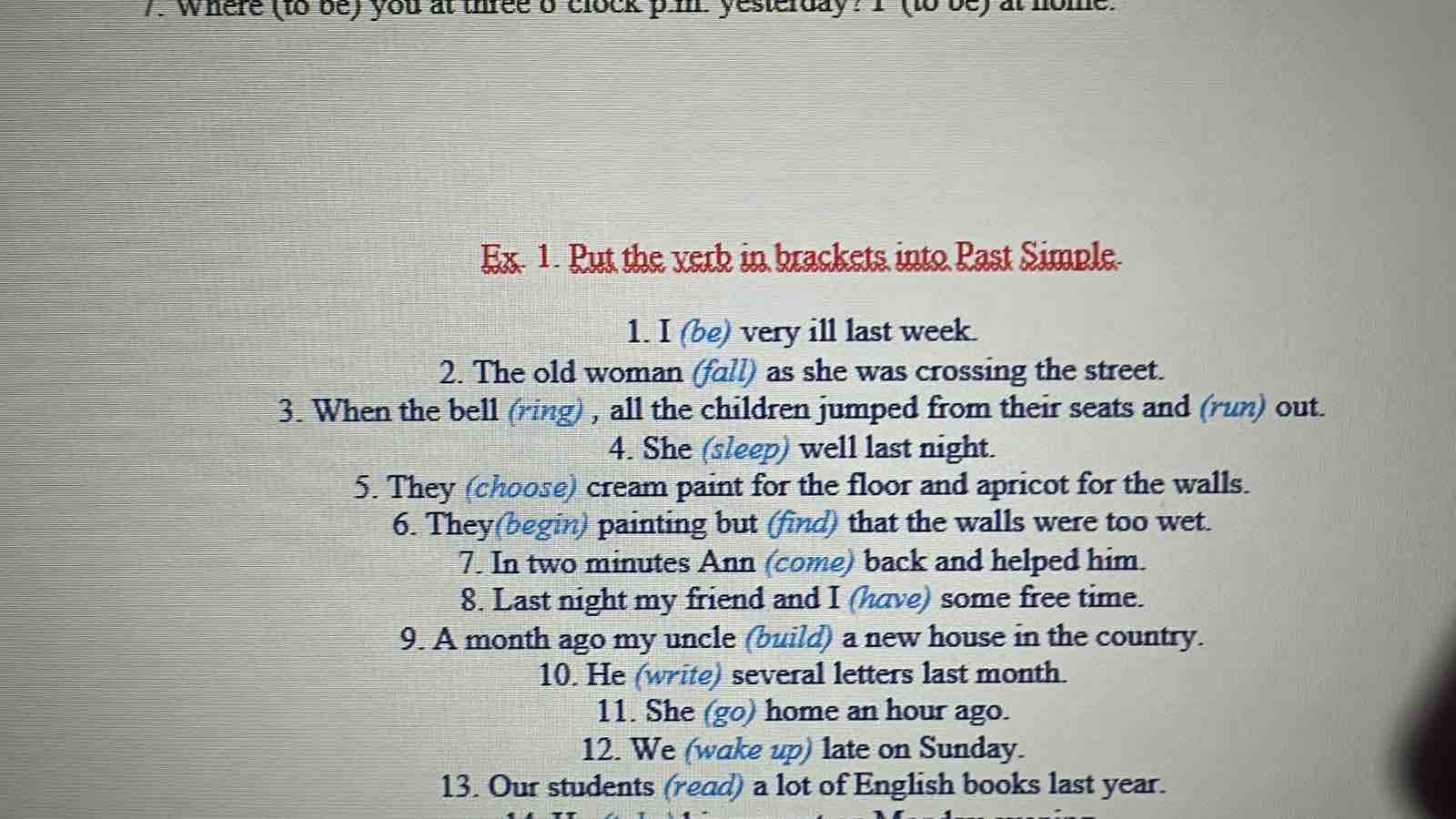
Ответ нейросети

10 сентября 2025 13:26

Ниже решения задачи по образованию Past Simple для каждого предложения. Я приводлю форму глагола в скобках и итоговое предложение, затем краткое объяснение.

  1. I (be) very ill last week.
  • I was very ill last week.
  • Обоснование: глагол “be” в прошедшем времени: was/were. Здесь подлежащее “I” => was. Контекст “last week” указывает на конкретный прошлый момент.
  1. The old woman (fall) as she was crossing the street.
  • The old woman fell as she was crossing the street.
  • Обоснование: fall — fell (неправильный глагол).
  1. When the bell (ring), all the children jumped from their seats and (run) out.
  • When the bell rang, all the children jumped from their seats and ran out.
  • Обоснование: ring → rang; run → ran (оба нерегулярные глаголы).
  1. She (sleep) well last night.
  • She slept well last night.
  • Обоснование: sleep → slept (неправильный глагол).
  1. They (choose) cream paint for the floor and apricot for the walls.
  • They chose cream paint for the floor and apricot for the walls.
  • Обоснование: choose → chose (нерегулярный глагол).
  1. They (begin) painting but (find) that the walls were too wet.
  • They began painting but found that the walls were too wet.
  • Обоснование: begin → began; find → found (оба нерегулярные).
  1. In two minutes Ann (come) back and helped him.
  • In two minutes Ann came back and helped him.
  • Обоснование: come → came (нерегулярный).
  1. Last night my friend and I (have) some free time.
  • Last night my friend and I had some free time.
  • Обоснование: have → had (нерегулярный).
  1. A month ago my uncle (build) a new house in the country.
  • A month ago my uncle built a new house in the country.
  • Обоснование: build → built (нерегулярный).
  1. He (write) several letters last month.
  • He wrote several letters last month.
  • Обоснование: write → wrote (нерегулярный).
  1. She (go) home an hour ago.
  • She went home an hour ago.
  • Обоснование: go → went (нерегулярный).
  1. We (wake up) late on Sunday.
  • We woke up late on Sunday.
  • Обоснование: wake up → woke up (фразовый глагол, неправильная форма в прошедшем).
  1. Our students (read) a lot of English books last year.
  • Our students read a lot of English books last year.
  • Обоснование: read в прошедшем пишется так же, как в настоящем, но произносится как [red].

Краткое резюме:

  • В Past Simple чаще всего добавляется -ed к регулярным глаголам (например, sleep → slept, wake up → woke up — здесь exceptions).
  • Нерегулярные глаголы меняются кардинально (be, fall, ring, run, begin, find, come, have, build, write, go, read и т. д.).
  • Обычно используются сигнальные слова времени как last week, last night, a month ago, yesterday, last year и т. п. для обозначения конкретного момента в прошлом.

Задай свой вопрос

Напиши любую задачу или вопрос, а нейросеть её решит

Похожие вопросы 15

Бесплатно Мобильное приложение ГДЗ
Мобильное приложение ГДЗ

Задавай вопросы искуcственному интеллекту текстом или фотографиями в приложении на iPhone или Android

qr-codegoogle-playapp-store

Саша — ассистент в телеграмме

реши
Ниже решения задачи по образованию Past Simple для каждого предложения. Я приводлю форму глагола в скобках и итоговое предложение, затем краткое объяснение. 1) I (be) very ill last week. - I was very ill last week. - Обоснование: глагол “be” в прошедшем времени: was/were. Здесь подлежащее “I” => was. Контекст “last week” указывает на конкретный прошлый момент. 2) The old woman (fall) as she was crossing the street. - The old woman fell as she was crossing the street. - Обоснование: fall — fell (неправильный глагол). 3) When the bell (ring), all the children jumped from their seats and (run) out. - When the bell rang, all the children jumped from their seats and ran out. - Обоснование: ring → rang; run → ran (оба нерегулярные глаголы). 4) She (sleep) well last night. - She slept well last night. - Обоснование: sleep → slept (неправильный глагол). 5) They (choose) cream paint for the floor and apricot for the walls. - They chose cream paint for the floor and apricot for the walls. - Обоснование: choose → chose (нерегулярный глагол). 6) They (begin) painting but (find) that the walls were too wet. - They began painting but found that the walls were too wet. - Обоснование: begin → began; find → found (оба нерегулярные). 7) In two minutes Ann (come) back and helped him. - In two minutes Ann came back and helped him. - Обоснование: come → came (нерегулярный). 8) Last night my friend and I (have) some free time. - Last night my friend and I had some free time. - Обоснование: have → had (нерегулярный). 9) A month ago my uncle (build) a new house in the country. - A month ago my uncle built a new house in the country. - Обоснование: build → built (нерегулярный). 10) He (write) several letters last month. - He wrote several letters last month. - Обоснование: write → wrote (нерегулярный). 11) She (go) home an hour ago. - She went home an hour ago. - Обоснование: go → went (нерегулярный). 12) We (wake up) late on Sunday. - We woke up late on Sunday. - Обоснование: wake up → woke up (фразовый глагол, неправильная форма в прошедшем). 13) Our students (read) a lot of English books last year. - Our students read a lot of English books last year. - Обоснование: read в прошедшем пишется так же, как в настоящем, но произносится как [red]. Краткое резюме: - В Past Simple чаще всего добавляется -ed к регулярным глаголам (например, sleep → slept, wake up → woke up — здесь exceptions). - Нерегулярные глаголы меняются кардинально (be, fall, ring, run, begin, find, come, have, build, write, go, read и т. д.). - Обычно используются сигнальные слова времени как last week, last night, a month ago, yesterday, last year и т. п. для обозначения конкретного момента в прошлом.