Бесплатный урок с нашим репетитором!

Узнать подробнее

Новая Школа - онлайн-школа подготовки к ЕГЭ
При поддержке
Посмотреть все вопросы нейросети
Бесплатный пробный урок с репетитором

Узнай больше про репетиторов Новой Школы и запишись на бесплатный пробный урок. Мы проверим твой уровень знаний и составим план обучения по любому предмету и классу

Вопрос от Анонимного юзера 11 сентября 2025 10:50

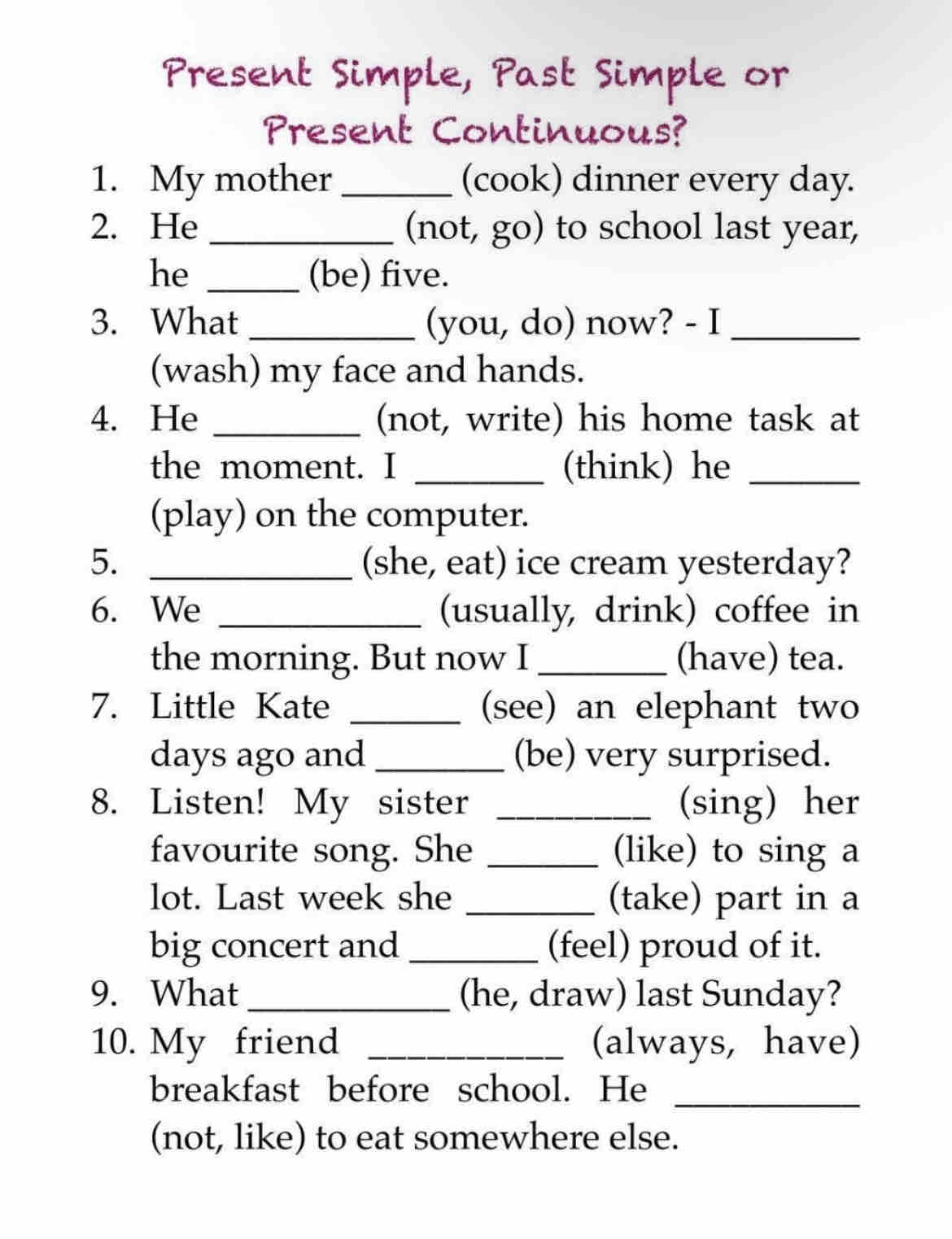
Реши задания
Ответ нейросети

11 сентября 2025 10:50

Ниже решение задачи по правилам времени Present Simple, Past Simple и Present Continuous. Пояснения даны после каждого пункта.

  1. My mother cooks dinner every day.
  • Обоснование: речь о habitual action (ежедневная привычка). Для третьего лица единственного числа добавляем -s: cook → cooks.
  1. He didn't go to school last year. He was five.
  • Обоснование: last year — указатель на прошлое, используем Past Simple. Отрицание в прошедшем образуется с помощ. глаголом did: did not go → didn't go. Затем простое глагольное был/быть: was.
  1. What are you doing now? - I am washing my face and hands.
  • Обоснование: действие происходит прямо сейчас → Present Continuous. Вопрос образуем с am/are/is + глагол-ing.
  1. He is not writing his home task at the moment. I think he is playing on the computer.
  • Обоснование: действиты сегодня прямо сейчас → Present Continuous. "at the moment" подсказка. Вторая часть: "I think" + он/он сейчас играет → is playing.
  1. Did she eat ice cream yesterday?
  • Обоснование: yesterday — прошедшее время, вопрос в Past Simple. Вопрос строим с did/does + подлежащее + глагол в базовой форме: Did she eat...?
  1. We usually drink coffee in the morning. But now I am having tea.
  • Обоснование: обычно (usually) — Present Simple: он/она/они обычно делают. "But now" указывает на текущее действие, поэтому Present Continuous: am having.
  1. Little Kate saw an elephant two days ago and was very surprised.
  • Обоснование: two days ago — прошедшее время → Past Simple: saw, was.
  1. Listen! My sister is singing her favourite song. She likes to sing a lot. Last week she took part in a big concert and felt proud of it.
  • Обоснование:
    • "is singing" — Present Continuous после команды Listen!.
    • "likes" — Present Simple (she likes to sing).
    • "Last week" — прошедшее время: "took part" и "felt" — Past Simple.
  1. What did he draw last Sunday?
  • Обоснование: last Sunday — прошедшее, образование вопроса через вспомогательный did: What did he draw...?
  1. My friend always has breakfast before school. He doesn't like to eat somewhere else.
  • Обоснование: always + Present Simple → has (для подлежащего во множественном числе или единичного числа друга: он/она). Отрицание в Present Simple: does not like → doesn't like (для he/she/it добавляем does + not).

Итоговые ответы (для повторения):

  1. My mother cooks dinner every day.
  2. He didn't go to school last year. He was five.
  3. What are you doing now? - I am washing my face and hands.
  4. He is not writing his home task at the moment. I think he is playing on the computer.
  5. Did she eat ice cream yesterday?
  6. We usually drink coffee in the morning. But now I am having tea.
  7. Little Kate saw an elephant two days ago and was very surprised.
  8. Listen! My sister is singing her favourite song. She likes to sing a lot. Last week she took part in a big concert and felt proud of it.
  9. What did he draw last Sunday?
  10. My friend always has breakfast before school. He doesn't like to eat somewhere else.

Если хочешь, могу превратить это в таблицу или сделать ещё несколько аналогичных заданий на ту же тему.

Задай свой вопрос

Напиши любую задачу или вопрос, а нейросеть её решит

Похожие вопросы 15

Бесплатно Мобильное приложение ГДЗ
Мобильное приложение ГДЗ

Задавай вопросы искуcственному интеллекту текстом или фотографиями в приложении на iPhone или Android

qr-codegoogle-playapp-store

Саша — ассистент в телеграмме

Реши задания
Ниже решение задачи по правилам времени Present Simple, Past Simple и Present Continuous. Пояснения даны после каждого пункта. 1) My mother cooks dinner every day. - Обоснование: речь о habitual action (ежедневная привычка). Для третьего лица единственного числа добавляем -s: cook → cooks. 2) He didn't go to school last year. He was five. - Обоснование: last year — указатель на прошлое, используем Past Simple. Отрицание в прошедшем образуется с помощ. глаголом did: did not go → didn't go. Затем простое глагольное был/быть: was. 3) What are you doing now? - I am washing my face and hands. - Обоснование: действие происходит прямо сейчас → Present Continuous. Вопрос образуем с am/are/is + глагол-ing. 4) He is not writing his home task at the moment. I think he is playing on the computer. - Обоснование: действиты сегодня прямо сейчас → Present Continuous. "at the moment" подсказка. Вторая часть: "I think" + он/он сейчас играет → is playing. 5) Did she eat ice cream yesterday? - Обоснование: yesterday — прошедшее время, вопрос в Past Simple. Вопрос строим с did/does + подлежащее + глагол в базовой форме: Did she eat...? 6) We usually drink coffee in the morning. But now I am having tea. - Обоснование: обычно (usually) — Present Simple: он/она/они обычно делают. "But now" указывает на текущее действие, поэтому Present Continuous: am having. 7) Little Kate saw an elephant two days ago and was very surprised. - Обоснование: two days ago — прошедшее время → Past Simple: saw, was. 8) Listen! My sister is singing her favourite song. She likes to sing a lot. Last week she took part in a big concert and felt proud of it. - Обоснование: - "is singing" — Present Continuous после команды Listen!. - "likes" — Present Simple (she likes to sing). - "Last week" — прошедшее время: "took part" и "felt" — Past Simple. 9) What did he draw last Sunday? - Обоснование: last Sunday — прошедшее, образование вопроса через вспомогательный did: What did he draw...? 10) My friend always has breakfast before school. He doesn't like to eat somewhere else. - Обоснование: always + Present Simple → has (для подлежащего во множественном числе или единичного числа друга: он/она). Отрицание в Present Simple: does not like → doesn't like (для he/she/it добавляем does + not). Итоговые ответы (для повторения): 1. My mother cooks dinner every day. 2. He didn't go to school last year. He was five. 3. What are you doing now? - I am washing my face and hands. 4. He is not writing his home task at the moment. I think he is playing on the computer. 5. Did she eat ice cream yesterday? 6. We usually drink coffee in the morning. But now I am having tea. 7. Little Kate saw an elephant two days ago and was very surprised. 8. Listen! My sister is singing her favourite song. She likes to sing a lot. Last week she took part in a big concert and felt proud of it. 9. What did he draw last Sunday? 10. My friend always has breakfast before school. He doesn't like to eat somewhere else. Если хочешь, могу превратить это в таблицу или сделать ещё несколько аналогичных заданий на ту же тему.