Бесплатный урок с нашим репетитором!

Узнать подробнее

Новая Школа - онлайн-школа подготовки к ЕГЭ
При поддержке
Посмотреть все вопросы нейросети
Бесплатный пробный урок с репетитором

Узнай больше про репетиторов Новой Школы и запишись на бесплатный пробный урок. Мы проверим твой уровень знаний и составим план обучения по любому предмету и классу

Вопрос от Анонимного юзера 16 сентября 2025 10:59

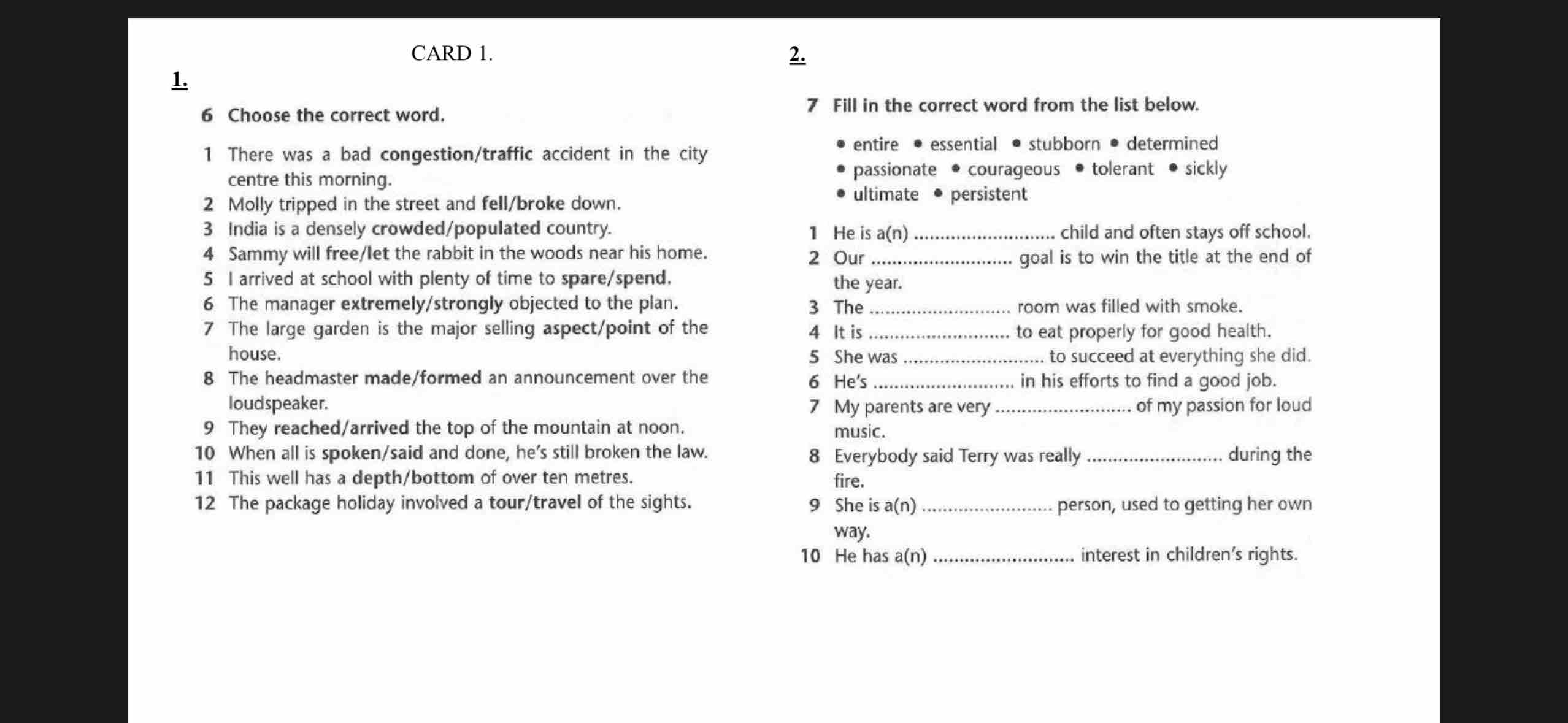
Реши на английском
Ответ нейросети

16 сентября 2025 10:59

Here is a detailed solution in English with explanations.

Part 1. Choose the correct word

  1. There was a bad traffic accident in the city centre this morning.
  • Why: “traffic accident” is the natural phrase; “congestion accident” isn’t used.
  1. Molly tripped in the street and fell.
  • Why: fall is the correct verb for a person; “broke down” is used for machines or metaphorically for systems.
  1. India is a densely populated country.
  • Why: “populated” is the standard adjective after “densely” for describing a country’s population.
  1. Sammy will free the rabbit in the woods near his home.
  • Why: to set an animal free is to release it; “let” would imply allowing something to happen, not releasing the animal.
  1. I arrived at school with plenty of time to spare.
  • Why: the common expression is “time to spare”; “time to spend” is less natural here.
  1. The manager strongly objected to the plan.
  • Why: “strongly” is the correct adverb to describe a firm objection; “extremely” is less fitting.
  1. The large garden is the major selling point of the house.
  • Why: “selling point” is the standard phrase; “selling aspect” is less common.
  1. The headmaster made an announcement over the loudspeaker.
  • Why: correct collocation is “made an announcement.”
  1. They reached the top of the mountain at noon.
  • Why: “reached” fits with “top of the mountain”; “arrived the top” is not correct here (you’d say “arrived at the top”).
  1. When all is said and done, he’s still broken the law.
  • Why: the fixed expression is “when all is said and done.”
  1. This well has a depth of over ten metres.
  • Why: we say “depth of” a well; “bottom” would refer to the lowest part, not the measurement of depth.
  1. The package holiday involved a tour of the sights.
  • Why: the natural phrase is “a tour of the sights.”

Part 2. Fill in the correct word from the list Word list: entire, essential, stubborn, determined, passionate, courageous, tolerant, sickly, ultimate, persistent

  1. He is a sickly child and often stays off school.
  • Reason: describes a child who is frequently ill.
  1. Our ultimate goal is to win the title at the end of the year.
  • Reason: “ultimate” means final or goals at the end.
  1. The entire room was filled with smoke.
  • Reason: “entire” means all; fits the sentence.
  1. It is essential to eat properly for good health.
  • Reason: something essential is absolutely necessary.
  1. She was determined to succeed at everything she did.
  • Reason: describes a strong resolve.
  1. He’s persistent in his efforts to find a good job.
  • Reason: describes continuing effort despite difficulties.
  1. My parents are very tolerant of my passion for loud music.
  • Reason: describes accepting or permissive attitude.
  1. Everybody said Terry was really courageous during the fire.
  • Reason: describes bravery in a dangerous situation.
  1. She is a stubborn person, used to getting her own way.
  • Reason: describes someone obstinate.
  1. He has a passionate interest in children's rights.
  • Reason: describes a strong, enthusiastic interest.

If you want, I can also provide a quick practice set with similar items to reinforce these choices.

Задай свой вопрос

Напиши любую задачу или вопрос, а нейросеть её решит

Похожие вопросы 15

Бесплатно Мобильное приложение ГДЗ
Мобильное приложение ГДЗ

Задавай вопросы искуcственному интеллекту текстом или фотографиями в приложении на iPhone или Android

qr-codegoogle-playapp-store

Саша — ассистент в телеграмме

Реши на английском
Here is a detailed solution in English with explanations. Part 1. Choose the correct word 1) There was a bad traffic accident in the city centre this morning. - Why: “traffic accident” is the natural phrase; “congestion accident” isn’t used. 2) Molly tripped in the street and fell. - Why: fall is the correct verb for a person; “broke down” is used for machines or metaphorically for systems. 3) India is a densely populated country. - Why: “populated” is the standard adjective after “densely” for describing a country’s population. 4) Sammy will free the rabbit in the woods near his home. - Why: to set an animal free is to release it; “let” would imply allowing something to happen, not releasing the animal. 5) I arrived at school with plenty of time to spare. - Why: the common expression is “time to spare”; “time to spend” is less natural here. 6) The manager strongly objected to the plan. - Why: “strongly” is the correct adverb to describe a firm objection; “extremely” is less fitting. 7) The large garden is the major selling point of the house. - Why: “selling point” is the standard phrase; “selling aspect” is less common. 8) The headmaster made an announcement over the loudspeaker. - Why: correct collocation is “made an announcement.” 9) They reached the top of the mountain at noon. - Why: “reached” fits with “top of the mountain”; “arrived the top” is not correct here (you’d say “arrived at the top”). 10) When all is said and done, he’s still broken the law. - Why: the fixed expression is “when all is said and done.” 11) This well has a depth of over ten metres. - Why: we say “depth of” a well; “bottom” would refer to the lowest part, not the measurement of depth. 12) The package holiday involved a tour of the sights. - Why: the natural phrase is “a tour of the sights.” Part 2. Fill in the correct word from the list Word list: entire, essential, stubborn, determined, passionate, courageous, tolerant, sickly, ultimate, persistent 1) He is a sickly child and often stays off school. - Reason: describes a child who is frequently ill. 2) Our ultimate goal is to win the title at the end of the year. - Reason: “ultimate” means final or goals at the end. 3) The entire room was filled with smoke. - Reason: “entire” means all; fits the sentence. 4) It is essential to eat properly for good health. - Reason: something essential is absolutely necessary. 5) She was determined to succeed at everything she did. - Reason: describes a strong resolve. 6) He’s persistent in his efforts to find a good job. - Reason: describes continuing effort despite difficulties. 7) My parents are very tolerant of my passion for loud music. - Reason: describes accepting or permissive attitude. 8) Everybody said Terry was really courageous during the fire. - Reason: describes bravery in a dangerous situation. 9) She is a stubborn person, used to getting her own way. - Reason: describes someone obstinate. 10) He has a passionate interest in children's rights. - Reason: describes a strong, enthusiastic interest. If you want, I can also provide a quick practice set with similar items to reinforce these choices.