Бесплатный урок с нашим репетитором!

Узнать подробнее

Новая Школа - онлайн-школа подготовки к ЕГЭ
При поддержке
Посмотреть все вопросы нейросети
Бесплатный пробный урок с репетитором

Узнай больше про репетиторов Новой Школы и запишись на бесплатный пробный урок. Мы проверим твой уровень знаний и составим план обучения по любому предмету и классу

Вопрос от Анонимного юзера 26 февраля 2025 08:41

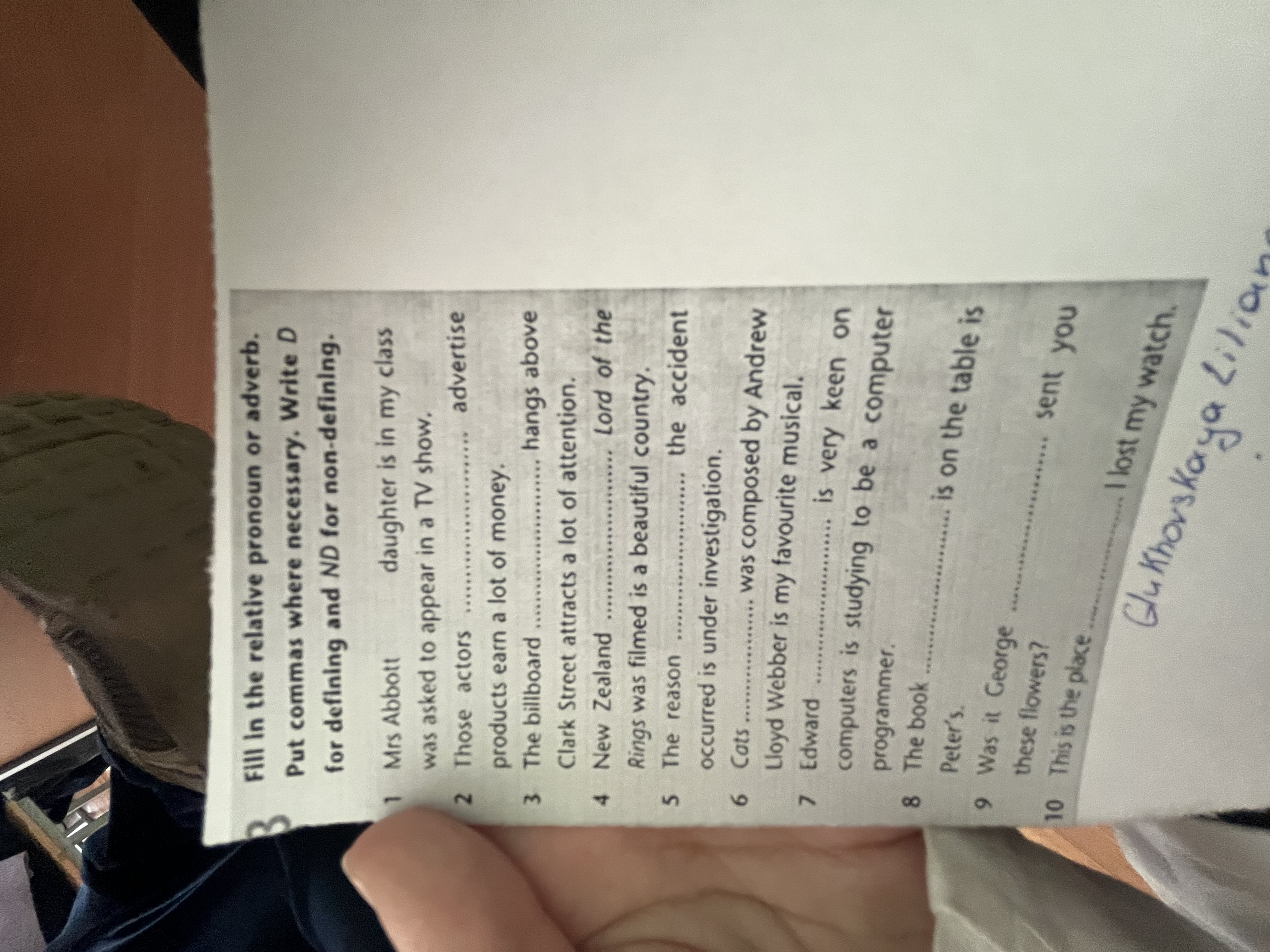
Сделай

Ответ нейросети

26 февраля 2025 08:41

To complete the task, we need to fill in the blanks with appropriate relative pronouns or adverbs and decide if the clauses are defining (D) or non-defining (ND).

  1. "Mrs Abbott, whose daughter is in my class, is very strict."

    • Non-defining (ND)
  2. "Those actors, whose performance I admire, were fantastic in the play."

    • Non-defining (ND)
  3. "The billboard that hangs above Clark Street attracts a lot of attention."

    • Defining (D)
  4. "New Zealand, where Lord of the Rings was filmed, is a beautiful country."

    • Non-defining (ND)
  5. "The reason (that) the accident occurred is under investigation."

    • Defining (D)
  6. "Cats, which are my favorite, were domesticized thousands of years ago."

    • Non-defining (ND)
  7. "……was composed by Andrew Lloyd Webber is necessary music."

    • Missing information—possible answer could be a non-defining clause with a composer name, e.g., "The musical Cats, which was composed by Andrew Lloyd Webber, is considered a classic."
  8. "Edward, who is believed to be a top computer programmer, is looking for a new job."

    • Non-defining (ND)
  9. "The book that Peter’s reading is on the table."

    • Defining (D)
  10. "Was it George who told you that?"

    • Defining (D)

The ones with commas are usually non-defining (ND), adding extra information, while those without commas are typically defining (D), specifying essential information about the noun.

Задай свой вопрос

Напиши любую задачу или вопрос, а нейросеть её решит

Похожие вопросы 15

Бесплатно Мобильное приложение ГДЗ
Мобильное приложение ГДЗ

Задавай вопросы искуcственному интеллекту текстом или фотографиями в приложении на iPhone или Android

qr-codegoogle-playapp-store

Саша — ассистент в телеграмме

Сделай
To complete the task, we need to fill in the blanks with appropriate relative pronouns or adverbs and decide if the clauses are defining (D) or non-defining (ND). 1. "Mrs Abbott, **whose** daughter is in my class, is very strict." - Non-defining (ND) 2. "Those actors, **whose** performance I admire, were fantastic in the play." - Non-defining (ND) 3. "The billboard **that** hangs above Clark Street attracts a lot of attention." - Defining (D) 4. "New Zealand, **where** Lord of the Rings was filmed, is a beautiful country." - Non-defining (ND) 5. "The reason **(that)** the accident occurred is under investigation." - Defining (D) 6. "Cats, **which** are my favorite, were domesticized thousands of years ago." - Non-defining (ND) 7. "……was composed by Andrew Lloyd Webber is necessary music." - Missing information—possible answer could be a non-defining clause with a composer name, e.g., "The musical Cats, **which** was composed by Andrew Lloyd Webber, is considered a classic." 8. "Edward, **who** is believed to be a top computer programmer, is looking for a new job." - Non-defining (ND) 9. "The book **that** Peter’s reading is on the table." - Defining (D) 10. "Was it George **who** told you that?" - Defining (D) The ones with commas are usually non-defining (ND), adding extra information, while those without commas are typically defining (D), specifying essential information about the noun.