

Вопрос от Анонимного юзера 09 марта 2025 15:27
Заполнить таблицу по информатеки
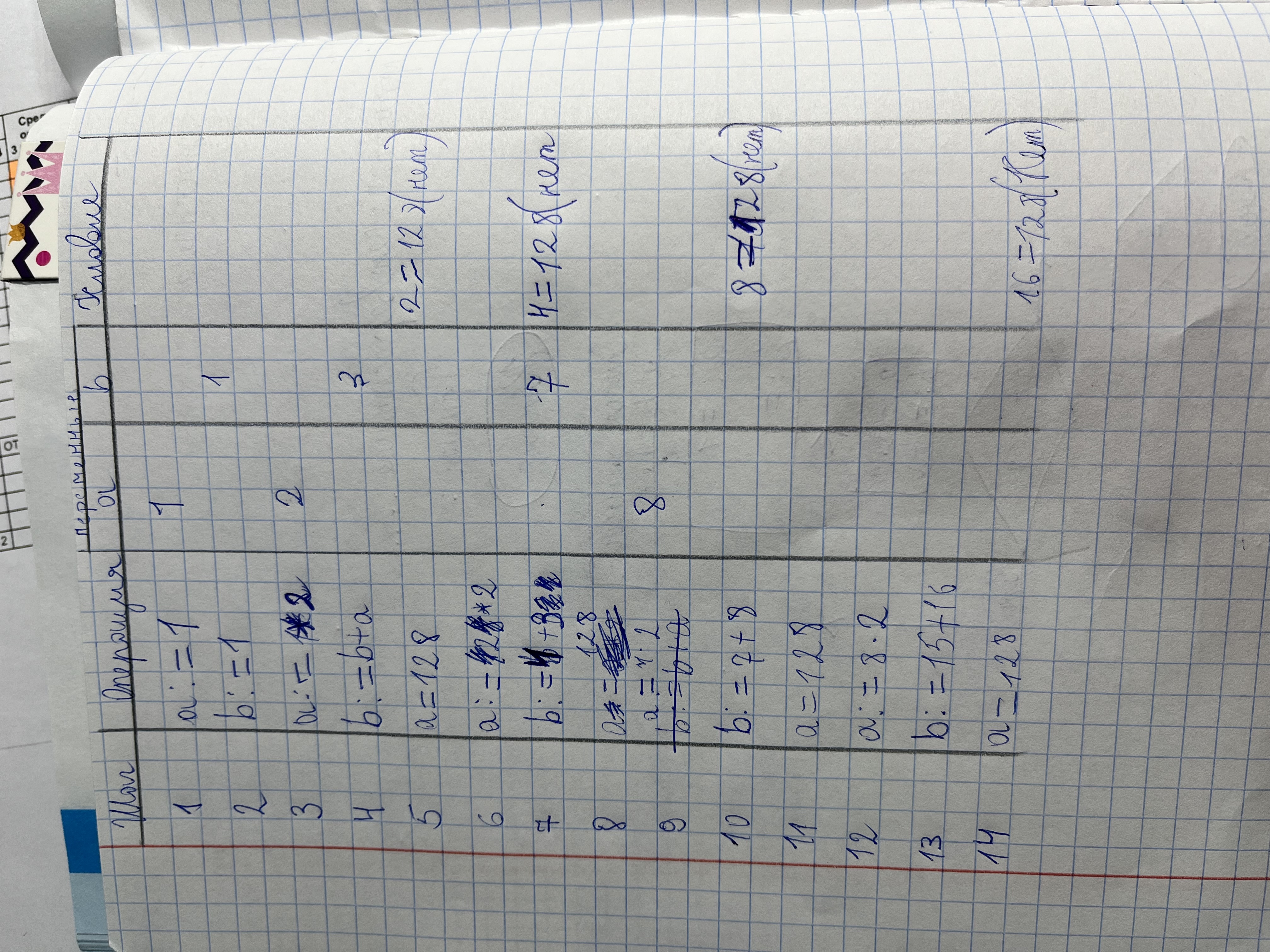

Ответ нейросети
09 марта 2025 15:27
To fill in the table, let's analyze the sequence of powers of two and the given expressions.
Explanation
The goal is to complete the table using powers of 2 and the given data.
Analysis
Understanding the powers of 2:
- (2^0 = 1)
- (2^1 = 2)
- (2^2 = 4)
- (2^3 = 8)
- (2^4 = 16)
- (2^5 = 32)
- (2^6 = 64)
- (2^7 = 128)
Completing the table:
- Observing the filled parts, we see that each row corresponds to a power of 2, either in direct form or simplified algebraic equations.
- Given expressions like (2 = 12 % (\text{rem})) help you understand the remainder when dividing numbers.
Filling the table
Complete each row with the next power of 2. For the remainder parts, use the structure given in the other rows:
Fill in missing rows:
- Since each row progresses as a power of two, fill each consequent number by double the previous number.
Addressing remainders:
- Continuously use previous computation as a base:
- (2^7 = 128), thus ( \text{row 8:} ) if missing will be (2^8 = 256).
- Compute remainders similarly based on division or subtraction method shown.
- Continuously use previous computation as a base:
Conclusion
The table is derived from the powers of 2, where each subsequent number builds on the principles of 2's exponents or simple arithmetic checks and validations like remainders. Analyze the structure of the table for patterns and apply logical deductions to continue the sequence.
Понравился ответ?
Задай свой вопрос
Напиши любую задачу или вопрос, а нейросеть её решит


