Бесплатный урок с нашим репетитором!

Узнать подробнее

Новая Школа - онлайн-школа подготовки к ЕГЭ
При поддержке
Посмотреть все вопросы нейросети
Бесплатный пробный урок с репетитором

Узнай больше про репетиторов Новой Школы и запишись на бесплатный пробный урок. Мы проверим твой уровень знаний и составим план обучения по любому предмету и классу

Вопрос от Анонимного юзера 06 февраля 2025 09:28

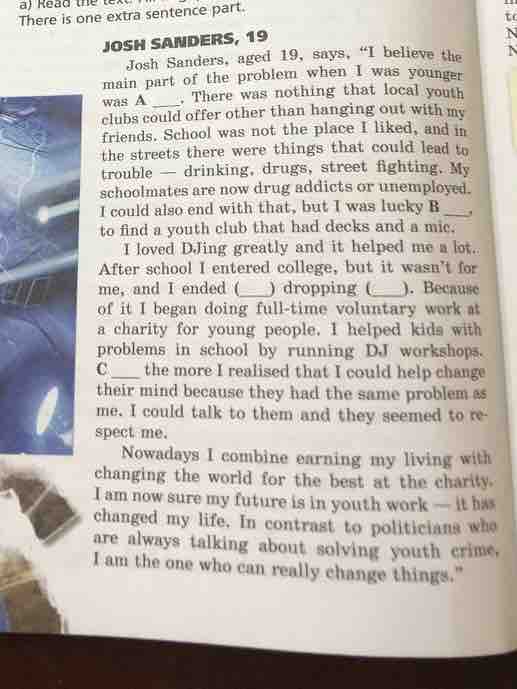
Сделать 1 so I left 2 when I was 14 3 who know what life is like 4 The more I did it 5 when I was very young 6 and the problem was worse 7 that I was bored JOSH SANDERS, 19 Josh Sanders, aged 19, says, "I believe the main part of the problem when I was younger was A. There was nothing that local youth clubs could offer other than hanging out with my friends. School was not the place I liked, and in the streets there were things that could lead to trouble - drinking, drugs, street fighting. My schoolmates are now drug addicts or unemployed. I could also end with that, but I was lucky B to find a youth club that had decks and a mic. I loved D Jing greatly and it helped me a lot. After school I entered college, but it wasn't for me, and I ended dropping. Because of it I began doing full-time voluntary work at a charity for young people. I helped kids with problems in school by running DJ workshops. C_ the more I realised that I could help change their mind because they had the same problem as me.I could talk to them and they seemed to respect me. Nowadays I combine earning my living with changing the world for the best at the charity. I am now sure my future is in youth work — it has are always talking about solving youth crime, changed my life. In contrast to politicians who I am the one who can really change things." AMARI SMITH, 18 Amari Smith, who is 18, remembers her school life as always getting into trouble. She says, a fight with a girl when I was 14 and my teachers said I would end up in prison if I didn't stop doing things like that. My parents divorced D living with my dad, but at the age of 16, I went to live with my mum. We had lots of quarrels, and it didn't work out, E I didn't think of my future and didn't care about myself. My way of life was just hanging around with girl gangs who carried knives and guns. One day I joined Tomorrow's People charity. It helped me to feel comfort and care there. They didn't talk ( to you and they listened. I teamed with people who were making a video for schools and colleges about the danger of carrying guns. From my experience I know kids don't listen to older people, but it's evident they might pay more attention to teenagers like us F on the streets During summer holidays we also organised a soccer club to get younger kids up every morn- ing and join. I've always had a strong wish to survive, and I feel I've given something. Now I work for charity and it helped me to get a flat. Now I'm doing my best to apply to study law at college."
Ответ нейросети

06 февраля 2025 09:28

Для этой задачи нужно заполнить пропуски в тексте так, чтобы он был логически завершённым. Давай разберёмся, какие фразы наиболее подходят для каждого пропуска.

Текст Джоша Сандерса:

  1. A. "I believe the main part of the problem when I was younger was that I was bored."

    • Логически подходит, так как он описывает, как ему было скучно в школе и на улице.
  2. B. "I could also end with that, but I was lucky to find a youth club that had decks and a mic."

    • Подходит по смыслу, так как он нашёл клуб, который его заинтересовал.
  3. C. "The more I did it, the more I realised that I could help change their mind because they had the same problem as me."

    • Подходит здесь, так как он описывает процесс своего участия и понимания.

Текст Амари Смит:

  1. D. "My parents divorced when I was very young living with my dad, but at the age of 16, I went to live with my mum."

    • Логично по хронологии и соответствует упоминанию о разводе.
  2. E. "We had lots of quarrels, and it didn't work out, so I left."

    • Подходит по контексту, когда она описывает свою ситуацию.
  3. F. "Kids don't listen to older people, but it's evident they might pay more attention to teenagers like us who know what life is like on the streets."

    • Это логически объясняет, почему её опыт может быть полезен.

Таким образом, заполненные предложения придадут текстам логичность и течь повествования.

Задай свой вопрос

Напиши любую задачу или вопрос, а нейросеть её решит

Похожие вопросы 15

Бесплатно Мобильное приложение ГДЗ
Мобильное приложение ГДЗ

Задавай вопросы искуcственному интеллекту текстом или фотографиями в приложении на iPhone или Android

qr-codegoogle-playapp-store

Саша — ассистент в телеграмме

сделать 1 so I left 2 when I was 14 3 who know what life is like 4 The more I did it 5 when I was very young 6 and the problem was worse 7 that I was bored JOSH SANDERS, 19 Josh Sanders, aged 19, says, "I believe the main part of the problem when I was younger was A. There was nothing that local youth clubs could offer other than hanging out with my friends. School was not the place I liked, and in the streets there were things that could lead to trouble - drinking, drugs, street fighting. My schoolmates are now drug addicts or unemployed. I could also end with that, but I was lucky B to find a youth club that had decks and a mic. I loved D Jing greatly and it helped me a lot. After school I entered college, but it wasn't for me, and I ended dropping. Because of it I began doing full-time voluntary work at a charity for young people. I helped kids with problems in school by running DJ workshops. C_ the more I realised that I could help change their mind because they had the same problem as me.I could talk to them and they seemed to respect me. Nowadays I combine earning my living with changing the world for the best at the charity. I am now sure my future is in youth work — it has are always talking about solving youth crime, changed my life. In contrast to politicians who I am the one who can really change things." AMARI SMITH, 18 Amari Smith, who is 18, remembers her school life as always getting into trouble. She says, a fight with a girl when I was 14 and my teachers said I would end up in prison if I didn't stop doing things like that. My parents divorced D living with my dad, but at the age of 16, I went to live with my mum. We had lots of quarrels, and it didn't work out, E I didn't think of my future and didn't care about myself. My way of life was just hanging around with girl gangs who carried knives and guns. One day I joined Tomorrow's People charity. It helped me to feel comfort and care there. They didn't talk ( to you and they listened. I teamed with people who were making a video for schools and colleges about the danger of carrying guns. From my experience I know kids don't listen to older people, but it's evident they might pay more attention to teenagers like us F on the streets During summer holidays we also organised a soccer club to get younger kids up every morn- ing and join. I've always had a strong wish to survive, and I feel I've given something. Now I work for charity and it helped me to get a flat. Now I'm doing my best to apply to study law at college."
Для этой задачи нужно заполнить пропуски в тексте так, чтобы он был логически завершённым. Давай разберёмся, какие фразы наиболее подходят для каждого пропуска. ### Текст Джоша Сандерса: 1. **A**. "I believe the main part of the problem when I was younger was **that I was bored**." - Логически подходит, так как он описывает, как ему было скучно в школе и на улице. 2. **B**. "I could also end with that, but I was lucky **to find** a youth club that had decks and a mic." - Подходит по смыслу, так как он нашёл клуб, который его заинтересовал. 3. **C**. "The more I did it, the more I realised that I could help change their mind because they had the same problem as me." - Подходит здесь, так как он описывает процесс своего участия и понимания. ### Текст Амари Смит: 4. **D**. "My parents divorced **when I was very young** living with my dad, but at the age of 16, I went to live with my mum." - Логично по хронологии и соответствует упоминанию о разводе. 5. **E**. "We had lots of quarrels, and it didn't work out, **so I left**." - Подходит по контексту, когда она описывает свою ситуацию. 6. **F**. "Kids don't listen to older people, but it's evident they might pay more attention to teenagers like us **who know what life is like** on the streets." - Это логически объясняет, почему её опыт может быть полезен. Таким образом, заполненные предложения придадут текстам логичность и течь повествования.