Бесплатный урок с нашим репетитором!

Узнать подробнее

Новая Школа - онлайн-школа подготовки к ЕГЭ
При поддержке
Посмотреть все вопросы нейросети
Бесплатный пробный урок с репетитором

Узнай больше про репетиторов Новой Школы и запишись на бесплатный пробный урок. Мы проверим твой уровень знаний и составим план обучения по любому предмету и классу

Вопрос от Анонимного юзера 23 февраля 2025 15:13

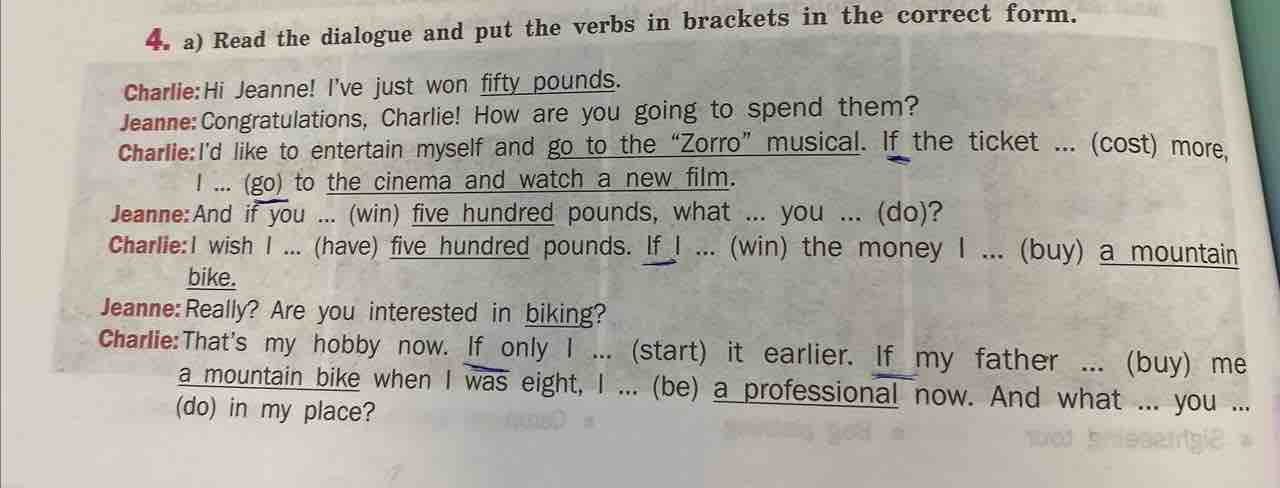
Раскрыть скобки

Ответ нейросети

23 февраля 2025 15:13

To solve the task of verb conjugation in brackets, let’s look at each sentence and determine the correct verb form based on the context. The goal is to properly complete the sentences with the correct tense or mood.

  1. Charlie: If the ticket costs more, I'll go to the cinema and watch a new film.

    • The condition is in the present, so we use the present simple "costs."
  2. Jeanne: And if you win five hundred pounds, what will you do?

    • The conditional "if" clause uses the present simple "win" for a real, possible future situation.
  3. Charlie: If I had five hundred pounds, I would buy a mountain bike.

    • This is a second conditional sentence for unreal or hypothetical situations, using the past simple "had."
  4. Jeanne: Really? Are you interested in biking?

    • (No verbs in brackets here, proceed to the next sentence.)
  5. Charlie: That's my hobby now. If only I had started it earlier.

    • "If only" is often used to express regret about the past, using past perfect "had started."
  6. If my father had bought me a mountain bike when I was eight, I'd be a professional now.

  • Another example of past regret using past perfect "had bought." For "was," use the past simple to indicate a specific time in the past.
  1. What would you do in my place?
    • A hypothetical question using "would" + base verb "do."

Here's a clear breakdown:

  • costs: present simple for a real condition.
  • win: present simple for future real condition.
  • had: past simple for unreal condition.
  • had started: past perfect for past regret.
  • had bought: past perfect for past hypothetical.
  • was: past simple for past description.
  • do: base form for hypothetical question.

This should give a comprehensive understanding of how each verb form is determined based on the sentence structure and context!

Задай свой вопрос

Напиши любую задачу или вопрос, а нейросеть её решит

Похожие вопросы 15

Бесплатно Мобильное приложение ГДЗ
Мобильное приложение ГДЗ

Задавай вопросы искуcственному интеллекту текстом или фотографиями в приложении на iPhone или Android

qr-codegoogle-playapp-store

Саша — ассистент в телеграмме

раскрыть скобки
To solve the task of verb conjugation in brackets, let’s look at each sentence and determine the correct verb form based on the context. The goal is to properly complete the sentences with the correct tense or mood. 1. **Charlie**: If the ticket **costs** more, I'll go to the cinema and watch a new film. - The condition is in the present, so we use the present simple "costs." 2. **Jeanne**: And if you **win** five hundred pounds, what will you do? - The conditional "if" clause uses the present simple "win" for a real, possible future situation. 3. **Charlie**: If I **had** five hundred pounds, I would buy a mountain bike. - This is a second conditional sentence for unreal or hypothetical situations, using the past simple "had." 4. **Jeanne**: Really? Are you interested in biking? - (No verbs in brackets here, proceed to the next sentence.) 5. **Charlie**: That's my hobby now. If only I **had started** it earlier. - "If only" is often used to express regret about the past, using past perfect "had started." 6. If my father **had bought** me a mountain bike when I **was** eight, I'd be a professional now. - Another example of past regret using past perfect "had bought." For "was," use the past simple to indicate a specific time in the past. 7. What would you **do** in my place? - A hypothetical question using "would" + base verb "do." Here's a clear breakdown: - **costs**: present simple for a real condition. - **win**: present simple for future real condition. - **had**: past simple for unreal condition. - **had started**: past perfect for past regret. - **had bought**: past perfect for past hypothetical. - **was**: past simple for past description. - **do**: base form for hypothetical question. This should give a comprehensive understanding of how each verb form is determined based on the sentence structure and context!