Бесплатный урок с нашим репетитором!

Узнать подробнее

Новая Школа - онлайн-школа подготовки к ЕГЭ
При поддержке
Посмотреть все вопросы нейросети
Бесплатный пробный урок с репетитором

Узнай больше про репетиторов Новой Школы и запишись на бесплатный пробный урок. Мы проверим твой уровень знаний и составим план обучения по любому предмету и классу

Вопрос от Анонимного юзера 02 марта 2025 23:34

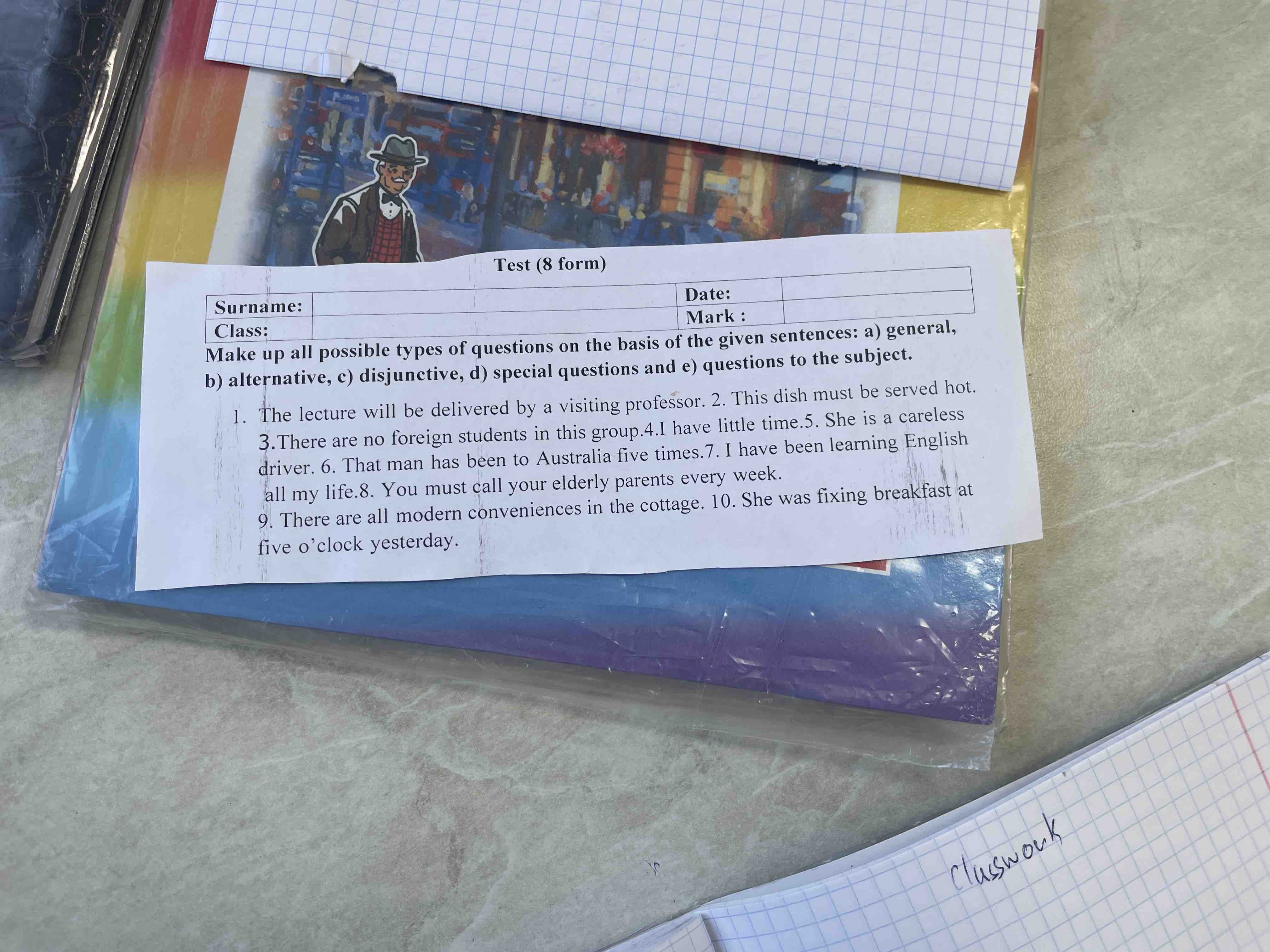
Make up all possible types of questions on the basis of the given sentences: a) general, b) alternative, c) disjunctive, d) special questions and e) questions to the subject. 1. The lecture will be delivered by a visiting professor. 2. This dish must be served hot. 3. There are no foreign students in this group. 4.I have little time. 5. She is a careless driver. 6. That man has been to Australia five times. 7. I have been learning English all my life.8. You must call your elderly parents every week. 9. There are all modern conveniences in the cottage. 10. She was fixing breakfast at five o'clock yesterday.
Ответ нейросети

02 марта 2025 23:34

Давайте разберем каждый тип вопросов на основе предложений:

  1. The lecture will be delivered by a visiting professor.

    • a) General: Will the lecture be delivered by a visiting professor?
    • b) Alternative: Will the lecture be delivered by a visiting professor or a local professor?
    • c) Disjunctive: The lecture will be delivered by a visiting professor, won’t it?
    • d) Special: Who will deliver the lecture?
    • e) To the subject: Who will deliver the lecture?
  2. This dish must be served hot.

    • a) General: Must this dish be served hot?
    • b) Alternative: Must this dish be served hot or cold?
    • c) Disjunctive: This dish must be served hot, mustn't it?
    • d) Special: How must this dish be served?
    • e) To the subject: What must be served hot?
  3. There are no foreign students in this group.

    • a) General: Are there any foreign students in this group?
    • b) Alternative: Are there foreign or local students in this group?
    • c) Disjunctive: There are no foreign students in this group, are there?
    • d) Special: Where are there no foreign students?
    • e) To the subject: Who are there none of in this group?
  4. I have little time.

    • a) General: Do you have little time?
    • b) Alternative: Do you have little or much time?
    • c) Disjunctive: You have little time, don’t you?
    • d) Special: How much time do you have?
    • e) To the subject: Who has little time?
  5. She is a careless driver.

    • a) General: Is she a careless driver?
    • b) Alternative: Is she a careless or careful driver?
    • c) Disjunctive: She is a careless driver, isn’t she?
    • d) Special: What kind of driver is she?
    • e) To the subject: Who is a careless driver?
  6. That man has been to Australia five times.

    • a) General: Has that man been to Australia five times?
    • b) Alternative: Has that man been to Australia five or six times?
    • c) Disjunctive: That man has been to Australia five times, hasn’t he?
    • d) Special: How many times has that man been to Australia?
    • e) To the subject: Who has been to Australia five times?
  7. I have been learning English all my life.

    • a) General: Have you been learning English all your life?
    • b) Alternative: Have you been learning English or another language all your life?
    • c) Disjunctive: You have been learning English all your life, haven’t you?
    • d) Special: What have you been learning all your life?
    • e) To the subject: Who has been learning English all their life?
  8. You must call your elderly parents every week.

    • a) General: Must you call your elderly parents every week?
    • b) Alternative: Must you call your elderly parents every week or every month?
    • c) Disjunctive: You must call your elderly parents every week, mustn't you?
    • d) Special: How often must you call your elderly parents?
    • e) To the subject: Who must call their elderly parents every week?
  9. There are all modern conveniences in the cottage.

    • a) General: Are there all modern conveniences in the cottage?
    • b) Alternative: Are there modern conveniences in the cottage or not?
    • c) Disjunctive: There are all modern conveniences in the cottage, aren’t there?
    • d) Special: What is in the cottage?
    • e) To the subject: What are there in the cottage?
  10. She was fixing breakfast at five o'clock yesterday.

  • a) General: Was she fixing breakfast at five o'clock yesterday?
  • b) Alternative: Was she fixing breakfast or lunch at five o'clock yesterday?
  • c) Disjunctive: She was fixing breakfast at five o'clock yesterday, wasn't she?
  • d) Special: What was she fixing at five o'clock yesterday?
  • e) To the subject: Who was fixing breakfast at five o'clock yesterday?

Задай свой вопрос

Напиши любую задачу или вопрос, а нейросеть её решит

Похожие вопросы 15

Бесплатно Мобильное приложение ГДЗ
Мобильное приложение ГДЗ

Задавай вопросы искуcственному интеллекту текстом или фотографиями в приложении на iPhone или Android

qr-codegoogle-playapp-store

Саша — ассистент в телеграмме

Make up all possible types of questions on the basis of the given sentences: a) general, b) alternative, c) disjunctive, d) special questions and e) questions to the subject. 1. The lecture will be delivered by a visiting professor. 2. This dish must be served hot. 3. There are no foreign students in this group. 4.I have little time. 5. She is a careless driver. 6. That man has been to Australia five times. 7. I have been learning English all my life.8. You must call your elderly parents every week. 9. There are all modern conveniences in the cottage. 10. She was fixing breakfast at five o'clock yesterday.
Давайте разберем каждый тип вопросов на основе предложений: 1. **The lecture will be delivered by a visiting professor.** - a) **General:** Will the lecture be delivered by a visiting professor? - b) **Alternative:** Will the lecture be delivered by a visiting professor or a local professor? - c) **Disjunctive:** The lecture will be delivered by a visiting professor, won’t it? - d) **Special:** Who will deliver the lecture? - e) **To the subject:** Who will deliver the lecture? 2. **This dish must be served hot.** - a) **General:** Must this dish be served hot? - b) **Alternative:** Must this dish be served hot or cold? - c) **Disjunctive:** This dish must be served hot, mustn't it? - d) **Special:** How must this dish be served? - e) **To the subject:** What must be served hot? 3. **There are no foreign students in this group.** - a) **General:** Are there any foreign students in this group? - b) **Alternative:** Are there foreign or local students in this group? - c) **Disjunctive:** There are no foreign students in this group, are there? - d) **Special:** Where are there no foreign students? - e) **To the subject:** Who are there none of in this group? 4. **I have little time.** - a) **General:** Do you have little time? - b) **Alternative:** Do you have little or much time? - c) **Disjunctive:** You have little time, don’t you? - d) **Special:** How much time do you have? - e) **To the subject:** Who has little time? 5. **She is a careless driver.** - a) **General:** Is she a careless driver? - b) **Alternative:** Is she a careless or careful driver? - c) **Disjunctive:** She is a careless driver, isn’t she? - d) **Special:** What kind of driver is she? - e) **To the subject:** Who is a careless driver? 6. **That man has been to Australia five times.** - a) **General:** Has that man been to Australia five times? - b) **Alternative:** Has that man been to Australia five or six times? - c) **Disjunctive:** That man has been to Australia five times, hasn’t he? - d) **Special:** How many times has that man been to Australia? - e) **To the subject:** Who has been to Australia five times? 7. **I have been learning English all my life.** - a) **General:** Have you been learning English all your life? - b) **Alternative:** Have you been learning English or another language all your life? - c) **Disjunctive:** You have been learning English all your life, haven’t you? - d) **Special:** What have you been learning all your life? - e) **To the subject:** Who has been learning English all their life? 8. **You must call your elderly parents every week.** - a) **General:** Must you call your elderly parents every week? - b) **Alternative:** Must you call your elderly parents every week or every month? - c) **Disjunctive:** You must call your elderly parents every week, mustn't you? - d) **Special:** How often must you call your elderly parents? - e) **To the subject:** Who must call their elderly parents every week? 9. **There are all modern conveniences in the cottage.** - a) **General:** Are there all modern conveniences in the cottage? - b) **Alternative:** Are there modern conveniences in the cottage or not? - c) **Disjunctive:** There are all modern conveniences in the cottage, aren’t there? - d) **Special:** What is in the cottage? - e) **To the subject:** What are there in the cottage? 10. **She was fixing breakfast at five o'clock yesterday.** - a) **General:** Was she fixing breakfast at five o'clock yesterday? - b) **Alternative:** Was she fixing breakfast or lunch at five o'clock yesterday? - c) **Disjunctive:** She was fixing breakfast at five o'clock yesterday, wasn't she? - d) **Special:** What was she fixing at five o'clock yesterday? - e) **To the subject:** Who was fixing breakfast at five o'clock yesterday?