Бесплатный урок с нашим репетитором!

Узнать подробнее

Новая Школа - онлайн-школа подготовки к ЕГЭ
При поддержке
Посмотреть все вопросы нейросети
Бесплатный пробный урок с репетитором

Узнай больше про репетиторов Новой Школы и запишись на бесплатный пробный урок. Мы проверим твой уровень знаний и составим план обучения по любому предмету и классу

Вопрос от Анонимного юзера 14 января 2025 09:37

Номер 9
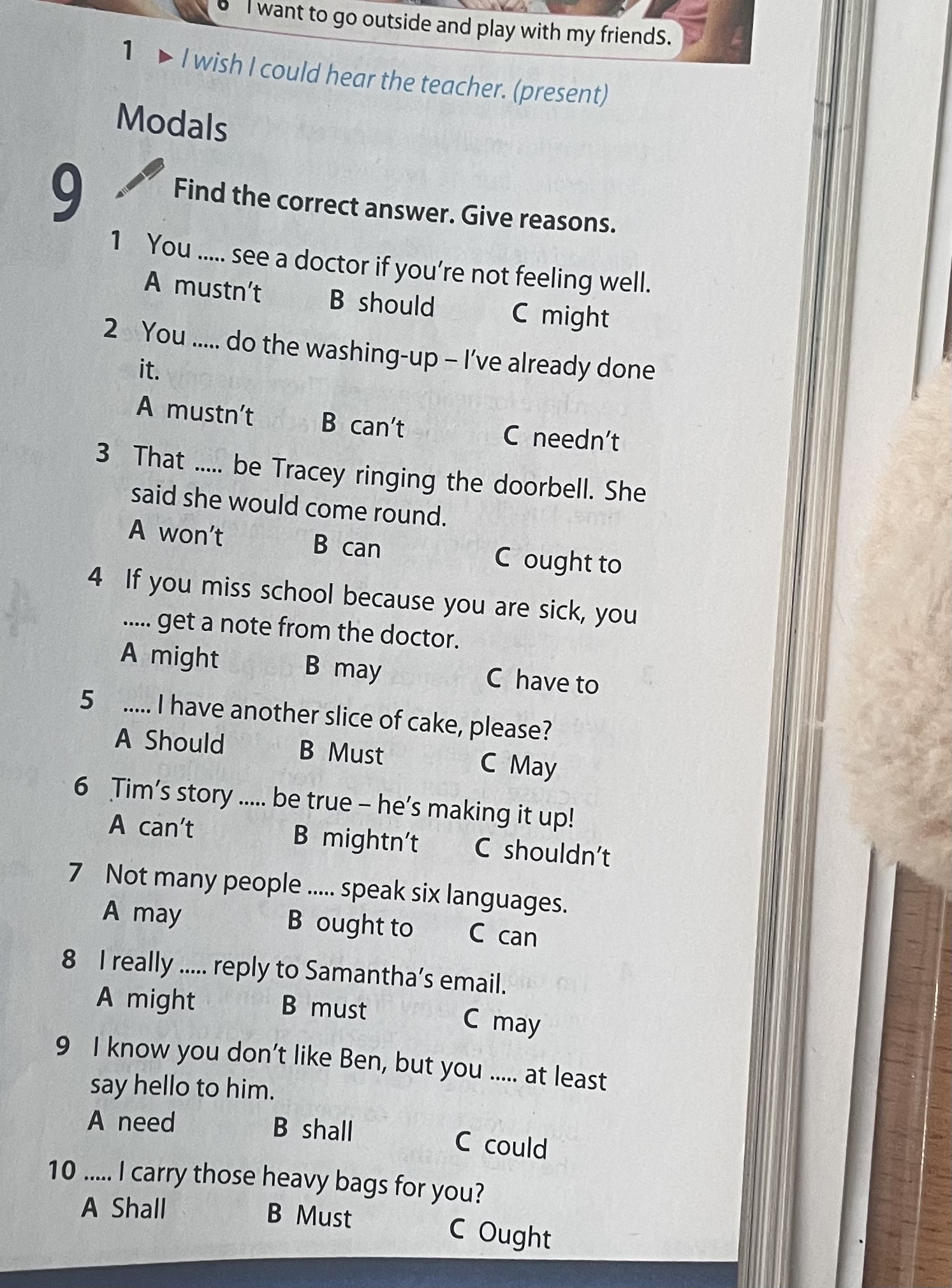
Ответ нейросети

14 января 2025 09:37

Here are the correct answers with explanations:

  1. B - should: "You should see a doctor if you're not feeling well." This is advice or recommendation.
  2. A - don't have to: "I don't have to do the washing-up — I've already done it." Indicates lack of necessity.
  3. C - needn't: "You needn't worry about the letter — I've posted it." Means it's not necessary to worry.
  4. B - can't: "That can't be Tracey ringing the doorbell. She is at work now." Indicates impossibility.
  5. B - might: "If you miss school because you are sick, you might get a note from the doctor." Indicates possibility.
  6. C - may: "A small piece of cake, please — I may be on a diet but I still want a treat!" Indicates permission or possibility.
  7. C - can: "Tim's story may or can be true — but I doubt it." Both "may" and "can" are acceptable, but "can" is often used for ability or possibility.
  8. C - can: "Not many people can speak six languages." Indicates ability.
  9. C - ought to: "I really ought to reply to Samantha's email." Suggests a strong recommendation or obligation.
  10. B - shall: "Shall I carry those heavy bags for you?" Offers assistance or suggestion.

Задай свой вопрос

Напиши любую задачу или вопрос, а нейросеть её решит

Похожие вопросы 15

Бесплатно Мобильное приложение ГДЗ
Мобильное приложение ГДЗ

Задавай вопросы искуcственному интеллекту текстом или фотографиями в приложении на iPhone или Android

qr-codegoogle-playapp-store

Саша — ассистент в телеграмме

Номер 9
Here are the correct answers with explanations: 1. B - should: "You should see a doctor if you're not feeling well." This is advice or recommendation. 2. A - don't have to: "I don't have to do the washing-up — I've already done it." Indicates lack of necessity. 3. C - needn't: "You needn't worry about the letter — I've posted it." Means it's not necessary to worry. 4. B - can't: "That can't be Tracey ringing the doorbell. She is at work now." Indicates impossibility. 5. B - might: "If you miss school because you are sick, you might get a note from the doctor." Indicates possibility. 6. C - may: "A small piece of cake, please — I may be on a diet but I still want a treat!" Indicates permission or possibility. 7. C - can: "Tim's story may or can be true — but I doubt it." Both "may" and "can" are acceptable, but "can" is often used for ability or possibility. 8. C - can: "Not many people can speak six languages." Indicates ability. 9. C - ought to: "I really ought to reply to Samantha's email." Suggests a strong recommendation or obligation. 10. B - shall: "Shall I carry those heavy bags for you?" Offers assistance or suggestion.