Бесплатный урок с нашим репетитором!

Узнать подробнее

Новая Школа - онлайн-школа подготовки к ЕГЭ
При поддержке
Посмотреть все вопросы нейросети
Бесплатный пробный урок с репетитором

Узнай больше про репетиторов Новой Школы и запишись на бесплатный пробный урок. Мы проверим твой уровень знаний и составим план обучения по любому предмету и классу

Вопрос от Анонимного юзера 04 марта 2025 16:43

Решите пожалуйста

Ответ нейросети

04 марта 2025 16:43

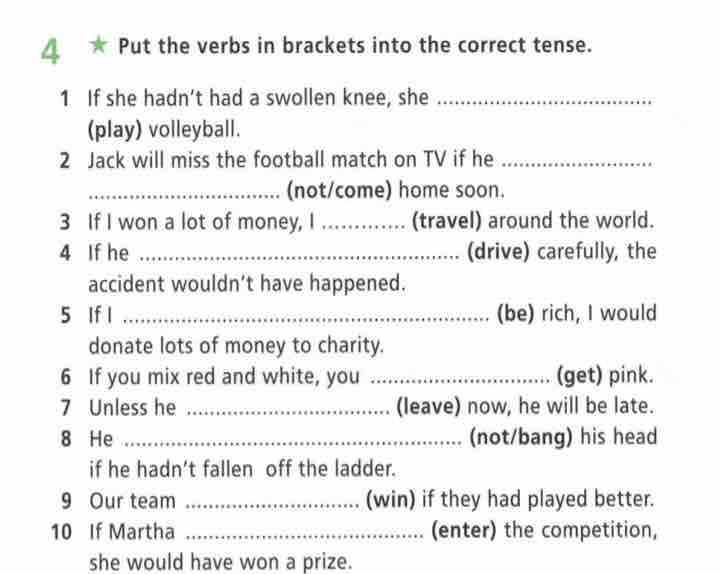
To solve this task, we'll put the verbs in brackets into the correct tense. This is an exercise on conditional sentences, specifically focusing on different types (first, second, or third conditionals).

  1. If she hadn’t had a swollen knee, she would have played volleyball.

    • This is a third conditional, talking about a past unreal situation.
  2. Jack will miss the football match on TV if he does not come home soon.

    • This is a first conditional, a real possibility in the future.
  3. If I won a lot of money, I would travel around the world.

    • This is a second conditional, talking about a hypothetical situation.
  4. If he had the driver had driven carefully, the accident wouldn’t have happened.

    • This is a third conditional, talking about a past unreal situation.
  5. If I were rich, I would donate lots of money to charity.

    • This is a second conditional, speaking about an unreal present situation.
  6. If you mix red and white, you get pink.

    • This is a zero conditional, which describes general truths.
  7. Unless he leaves now, he will be late.

    • This is a first conditional, a real possibility in the future.
  8. If he hadn’t fallen off the ladder, he would not have broken his leg.

    • This is a third conditional, talking about a past unreal situation.
  9. Our team would have won if they had played better.

    • This is a third conditional, expressing past regrets.
  10. If Martha enters the competition, she will have a good chance.

    • This is a first conditional, a real possibility in the future.

These answers reflect the correct usage of conditional forms, which vary depending on whether the sentence is talking about real or hypothetical conditions in the past, present, or future.

Задай свой вопрос

Напиши любую задачу или вопрос, а нейросеть её решит

Похожие вопросы 15

Бесплатно Мобильное приложение ГДЗ
Мобильное приложение ГДЗ

Задавай вопросы искуcственному интеллекту текстом или фотографиями в приложении на iPhone или Android

qr-codegoogle-playapp-store

Саша — ассистент в телеграмме

Решите пожалуйста
To solve this task, we'll put the verbs in brackets into the correct tense. This is an exercise on conditional sentences, specifically focusing on different types (first, second, or third conditionals). 1. If she hadn’t had a swollen knee, she **would have played** volleyball. - This is a third conditional, talking about a past unreal situation. 2. Jack will miss the football match on TV if he **does not come** home soon. - This is a first conditional, a real possibility in the future. 3. If I won a lot of money, I **would travel** around the world. - This is a second conditional, talking about a hypothetical situation. 4. If he had *the driver **had driven** carefully, the accident wouldn’t have happened.* - This is a third conditional, talking about a past unreal situation. 5. If I **were** rich, I would donate lots of money to charity. - This is a second conditional, speaking about an unreal present situation. 6. If you mix red and white, you **get** pink. - This is a zero conditional, which describes general truths. 7. Unless he **leaves** now, he will be late. - This is a first conditional, a real possibility in the future. 8. If he hadn’t fallen off the ladder, he **would not have broken** his leg. - This is a third conditional, talking about a past unreal situation. 9. Our team **would have won** if they had played better. - This is a third conditional, expressing past regrets. 10. If Martha **enters** the competition, she will have a good chance. - This is a first conditional, a real possibility in the future. These answers reflect the correct usage of conditional forms, which vary depending on whether the sentence is talking about real or hypothetical conditions in the past, present, or future.